The Gifts of the Spirit
Ministries > In Touch Ministries with Dr. Charles Stanley
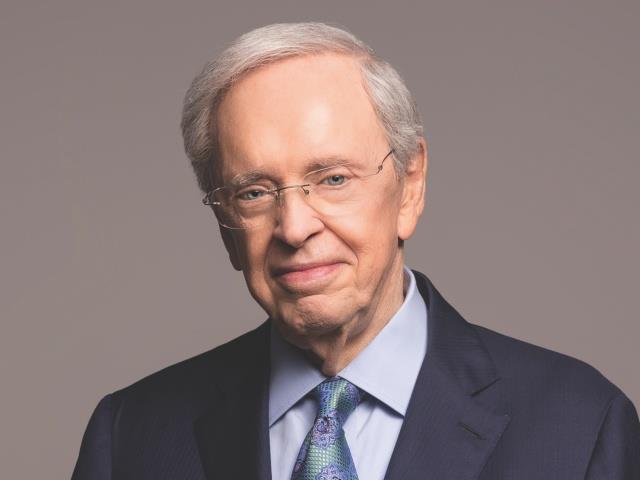
The Apostle Paul wrote a letter to the Corinthian church to correct beliefs about spiritual gifts, and - over 2,000 years later - Christians still disagree about them. Dr. Stanley discusses the book of I Corinthians and clarifies the common misunderstandings about the Gifts of the Spirit. Discover how you can serve God effectively as you exercise your spiritual gift.
Dr. Charles Stanley: A lot of people want to be able to say, "Well, I have this gift and that gift." You know what? You ought to get on your knees and thank God first of all that He saved you. You have nothing to boast of. And secondly, whatever gift God gives you wasn't given to you for you in the first place. It's given to you for the whole body to serve the living God.
Guest (Male): God gives each believer in Christ at least one spiritual gift that drives the way they think and operate. And since He intends that we use those gifts to serve one another, it's important that you find your place in the church. Welcome to In Touch, the teaching ministry of Dr. Charles Stanley. The remainder of our series on living in the power of the Holy Spirit helps us understand and grow together in our God-given gifts.
Dr. Charles Stanley: Do you realize that the Holy Spirit has gifted you with a spiritual gift that is perfectly suited for God's plan for your life, His work for your life, and the way He wants you to live? The tragedy is that many believers will go through their entire life, many of them trying to serve God and wondering why things don't turn out the way they think they ought to, or why they don't seem to be very comfortable serving God in this position or that or the other. Well, God's got a better plan than just guessing. He has a plan that's perfectly suited for your life. He has a gift for you that will make it possible for you to relate to other people better, understand how other people act and why they act the way they act. In fact, it'll make a lot of difference in your life, whether it's in your vocation or your church life, when you discover that primary motivational gift that God has given you and then you begin to function out of that gift. So that's what we're talking about beginning in this particular message. This is the third part in our series, "Living in the Power of the Holy Spirit." The first message had to do with who He is. Who is the Holy Spirit? He is the promise of the Father. He is the person of the Trinity. He's the seal that God has given to every single believer, our guide, our teacher. There are many activities that the Holy Spirit works in our life, but each one specifically relating to us according to our needs. And when it comes to why He came, the second message, why did He come? It was absolutely essential because He's so involved in our salvation, in our sanctification, and in our service to Him. The primary purpose of the gifts is that you and I would be able to serve God to the maximum of our potential in such a way that the fruit will be abundant. Secondly, we will be blessed, and thirdly, other people are going to be blessed and the kingdom of God will be stronger and the work of God will go on successfully. Well, turn if you will to 1 Corinthians chapter 12, beginning in verse one. We're talking about the gifts of the Spirit. "Now concerning spiritual gifts, brethren, I do not want you to be unaware. You know that when you were pagans, you were led astray to the mute idols, however you were led. Therefore I make known to you that no one speaking by the Spirit of God says 'Jesus is accursed,' and no one can say 'Jesus is Lord' except by the Holy Spirit." "Now there are varieties of gifts but the same Spirit. There are varieties of ministries and the same Lord. There are varieties of effects but the same God who works all things in all persons. But to each one is given the manifestation of the Spirit for the common good." One thing I want us to recognize right up front is that when God gives spiritual gifts, which He does, He always gives them for the common good, not for some individual's sake, or to make us feel good, or to get prideful and puffy about what we have or don't have. It's always for the common good of the whole body of Christ. One of the first things we need to do is to clarify terms because sometimes people get them a little confused. So let's look first of all at the idea of "the gift of the Spirit." We're talking about the person of the Holy Spirit who is given to every single believer upon our salvation. This is what Peter was preaching in Acts chapter 2 verse 38. When you were saved, the Holy Spirit came into your life to indwell and to seal you as a child of God. That was God's gift. Secondly, "the gifts of the Spirit" are those capabilities, those abilities that God gives to each individual that fit His purpose and plan for our life. The third word is "the fruit." That is the fruit of the Spirit which you know in Galatians chapter 5. It speaks of the character that the Holy Spirit intends to build in and through our life as a result of our being submissive to Him and walking in His will and in His way. That is the fruit of the Spirit which we know well: love, joy, peace, goodness, gentleness, self-control. So we're talking about primarily the gifts of the Spirit—that is, those abilities and those capacities that God gives us when we trust Him as our personal Savior and then we begin to walk out and live out the life. Now let's distinguish between something else: between human talent and a spiritual gift. Human talents are those capacities, those abilities that God gives to each and every person at their birth. You come into this world and you have a certain personality. Well, God gives you those talents, those skills shall we say, that are given to you at that moment because He gives them to you for the purpose of what He wants to do in your life. But these are natural talents. Sometimes a person can be very, very multi-talented. They just seem to be able to do many things very well. Some of the rest of us think, "Well, if I could just do half what they can do," or maybe they can do well in three or four areas or whatever it might be. They're from God, and He certainly wants them and desires that we use them for His glory, but it's not a spiritual gift. It's a natural talent. Many people who are not Christians are very gifted in some areas. Many things that you and I use every day were probably invented by people who are not even Christian. But all of us who are believers, we profit from that and we're grateful for it. But a spiritual gift is a specific ability and skill that God gives you in order to enable you to serve Him wisely and to the best of your God-given ability. It is that special gift He gives you. It becomes the motivation for all of your service for the Lord. So there is a difference. Now, a spiritual gift, for example, will naturally use and utilize the talent. For example, let's say you have a talent to do one thing. You have a spiritual gift. When you're a believer, you use your spiritual gift, understand what that is, and then your talent—you exercise your spiritual gift through that talent. You exercise your talent through that spiritual gift so that the two work beautifully together. You don't just have one and say, "Well, what about this?" God intends for you to work them just like that. So let's think about these cautions. Remember, you will have a spiritual gift. It's interesting how Peter says this because he mentions it in a little different way. He says in the fourth chapter, 1 Peter verse 10: "As each one has received a special gift, employ it in serving one another as good stewards of the manifold grace of God." Whatever your gift is, He says employ it in serving one another. We're talking about serving God, no matter what your vocation is, or where you go to church, or what your church is. You have a spiritual gift that's your obligation before God to utilize. This is a grace gift. This is something that God chose to give you out of His love for you. And therefore He wants you to exercise that for the benefit of all concerned. When I think about how that works in some people's lives and how it doesn't work in some other people's lives, it's simply because somewhere along the way they have missed the whole point. They want something for themselves. Likewise, you can't require another caution. You can't tell somebody else, "Now you need this gift. You ought to have it. If you were spiritual, you'd have it." Or if somebody says, "Well, if you had enough faith, you'd be healed." So you can't put a manifestation or a gift, for example, on somebody else and say, "Well, you ought to have such and so." That's not your business or my business. It's God's business and His business alone to decide which gift we have. Some people have more faith than other people have. Some people can just believe God. I mean, it's—but you see, that is a manifestation of something God is doing in their life, something He wants them to do. And so it is with all the gifts. If somebody says, "Well, some gifts just ended back yonder in the first century," that's not in the Bible. That's what some people think, but it's not in the Scripture. Is God still in the miracle-working business? Yes, He is. What we want to be sure is that we understand what the cautions are. Then we are not to seek a particular manifestation of a gift, for example, because we think that we can serve better that way. I'm repeating something I said. It's the Holy Spirit's job to choose which ones we have. It's my job to figure out what it is for me, and then however the ministry or whatever function I have, I'm to operate on that basis. Likewise, having a spiritual gift or any particular spiritual gift doesn't make you spiritually minded. It doesn't make you a spiritual-minded person because you have a particular gift. You can get out of fellowship with God. You can be ornery as the devil doing whatever you're doing because you're out of fellowship with God. So it doesn't mean that you're spiritual because you have a particular gift, and sometimes people feel that way. Now, with those cautions, let me get to one thing here. I want you to go back to Romans chapter 12 for a moment and look at these verses. I want to give you an illustration that will help. When he says, for example, in the 12th chapter—now listen carefully. Different people interpret these lists of gifts in different ways. This is certainly not original with me, but I've studied it long enough over a number of many, many years, watching how this works. I've watched it in the staff. I've watched it among my friends. I've watched in different aspects of the church. I've seen it for years and years and years. That's why I believe this is true. Because if you'll notice in this 12th chapter of Romans, he speaks of these different gifts and I call them, and other people call them, motivational gifts. When you watch this, you're going to understand what I'm saying. There is one of these that's the ultimate driving motivation in your life for what you do. Once you are able to identify it, you know what you're going to do? You're going to say, "Yeah, that is the way I respond. That's true." Well, it's been true all along. Romans chapter 12, listen to what he says beginning in verse four. "For just as we have many members in one body and all the members do not have the same function..." Now, here's what He's getting to show us. He makes this clear later. For example, God gave you eyes for what reason? To see. Ears to hear. Hands to handle. Feet to take you where He wants to take you. And each member of your physical body has its own purpose. For example, you do not see through your ears. You may have fantastic hearing. You do not smell through your eyes. In other words, every single aspect of the body has its own particular reason for being there. So it is in the body of Christ. The church needs all seven of these gifts. These are motivational gifts, and I'll explain that in a moment. So look if you will in verse five. "So we who are many are one body in Christ and individually members one of another. We all relate to each other. Since we have gifts that differ according to the grace given to us..." What makes them differ? According to the grace given to us. God in His grace has chosen to give you these gifts. Then he says, for example, "Each of us is to exercise them accordingly. If prophecy," which does not mean foretelling the future here but proclaiming the truth, "according to the proportion of his faith. If service, in his serving. Or he who teaches, in his teaching. He who exhorts, in his exhortation. He who gives, with liberality. He who leads, with diligence. He who shows mercy, with cheerfulness." Now, I want to give you an example so it'll better clarify what we mean by motivational gifts, and then we'll deal with each one of these in the next message. Let's say, for example, that at your house you're having a birthday party. There are eight people there and it's a surprise—surprise birthday party. You want to do something very special for this person, so you've done your best to bake them this awesome cake. It's big. It's got all the candles on it. You've sort of finished dinner now and now comes the time to surprise them. So you start singing "Happy Birthday to you," and then here comes the cake. You're all excited about what's going to happen. All of a sudden, bringing it out on this beautiful cake plate, the person stumbles and falls right before the kitchen table and smashes the plate. Cake everywhere. Candles burning over here. Just a big mess. Now, I want to take these seven people who are left around that table and show you how each gift will respond. You're going to see yourself, now you watch this. Get ready. Remember what we said: that you're going to respond according to your underlying motivational gift. Prophecy's going to say, "You shouldn't be a little bit clumsy there, aren't you?" In other words, they want to correct something. Then the gift of mercy, for example: "Oh my goodness, I'm so sorry. I just—oh, it just hurts me that that happened." They're motivated to eliminate embarrassment. The person who's merciful wants to help in any way they can. Then there is, for example, a gift of administration. Here's what the gift of administration would do: "Okay, all right. So you go get the broom. You get the mop. You pick up the pieces. Watch the glass. Move the chairs back. Let's clean this mess up right now." They're going to be in charge. Administration's going to be in charge—ruling or administration, whichever word you want to call it. Then, for example, there's the gift of service. The gift of service says, "That's okay. Listen, you just let me do it. I'll take care of this. Don't worry about it. I'm going to get it all up." Because they want to meet a need. There's a need there, and so the gift of service is going to operate in that fashion. Then there's the gift of giving. The gift of giving says, "Oh, you know what? I'll buy you another cake plate. Don't worry about that. Just let it go. Don't let that bother you at all. We can take care of that." Because they want to meet a particular financial need. Then, for example, there's the gift of teaching. And here's what teaching would say: "The reason you dropped the plate..." That's exactly right. "The reason you dropped the plate was because it was wet on the bottom and your hands were a little bit slick. And so you should have been more careful." Then exhortation would say, "Well, next time maybe you shouldn't bring it in here holding it by the stem, but you should bring it holding it like this so you'd have a good grip on it." Now, what did each person do? They responded out of their motivation. The gift of mercy would never have said, "You little clumsy." Never say that. The gift of service wouldn't just sit and watch somebody do something. They're going to be up and at it. The gift of administration would die if he had to just sit and say nothing because that's their motivation. So what happens? Can you imagine what would have happened if everybody around that table had the gift of administration? They'd be fighting each other. Or if everybody had the gift of mercy, nobody'd clean up. They'd just be saying, "Oh, I'm so sorry. Oh." Or if everybody had the gift of giving, they'd be seeing who could give the most and who could give it first to buy. So what happens? We all respond according to our gift. And the better you understand that, several things are going to happen. Number one, when you understand your spiritual gift, you are going to be confident about what you do in serving God. If you're serving out of your gift, you're going to be confident. Second thing is you're going to be more committed because now that you feel confident you're doing what God wants you to do, here's what's going to happen: you're going to be more committed to doing it. You're going to have a joy in your heart about serving God you have not had before. You're going to begin to understand other people and their ways that you had not understood before. You're going to understand why people act the way they act. I think about people getting married who have two different gifts. One of them has the gift of administration, the other has the gift of mercy. Well, "He's always telling me what to do. No matter what, he's just telling me what to do." Or if you have two mercies, they don't ever get anything done. Not necessarily. What I want you to see is this: we all respond accordingly, and every believer has a gift. When we get it right, and the body of believers get it right, that's what makes a church function absolutely in the most awesome fashion. When you're doing what God wants you to do and you're exercising your spiritual gift, not just working out of some talent you have, you know what happens? Everything around you changes and your service for God is the most effective. It's my goal to help you understand what your gift is. Don't you dare miss the next message. But as we talk about how you respond to others, how you act when you're in the Spirit, how you act when you're in the flesh, why other people misunderstand you—it'll be helpful in every area of your life. And that's my prayer: to build you up, help you to understand according to God's word, not what you see but according to God's word, how can you be the best servant of God you possibly can. Father, how grateful we are that You help us through these times. How I do pray that the Spirit of the living God, who has granted every believer a gift, that people will understand this, grasp it, utilize it, put it to work, and watch it operate in every aspect of their life. It's my prayer in Jesus' name, Amen.
Guest (Male): Today's edition of In Touch emphasized the gifts of the Holy Spirit. They're given to believers as a means to serve others and benefit the entire body of Christ. To study more about spiritual gifts or to research questions you may have about the Holy Spirit, stop by intouch.org. Head to the store to order a copy of today's complete message, "The Gifts of the Spirit." It's also included in Dr. Stanley's teaching set, "Living in the Power of the Holy Spirit." Again, that's intouch.org. Why is the church called the Body of Christ? Today's Moment with Charles Stanley is coming up next.
Dr. Charles Stanley: What are you living for? What is your goal and objective in life?
Guest (Male): For 60 years, Dr. Charles Stanley's sermons have blessed us. And today, his teachings continue to enrich our walk with Christ through the new Charles Stanley Institute. It's all built so you can live a more abundant Christian life, and it's completely free. Visit us at charlesstanleyinstitute.org. There is an inexplicable joy that comes from understanding Scripture and learning how to apply it in our own life. The Charles F. Stanley Life Principles Bible includes 30 foundational truths that Dr. Stanley has learned from over 60 years of ministry. It's available in the New King James Version, New International Version, King James Version, and New American Standard Bible. To order, call 1-800-INTOUCH or go to intouch.org/store. In Touch Plus is streaming on Local Now, featuring all the best of Dr. Charles Stanley. "You want to have strong convictions based on the word of God. He's working out things that you and I would never know about in our future." In Touch Plus, your streaming network for quality Christian programming 24/7. Watch now! In Touch Plus, streaming free on Local Now.
Dr. Charles Stanley: When Jesus was here, He was in a physical body, the sinless Son of God living in a physical body. No sin. When He left and ascended to the Father, He says, "Now we are the body of Christ," which means that God's physical body is what? The church. The Holy Spirit living on the inside of us is working through us, speaking through us, loving through us, serving through us. That is, we are the body of Christ. It has nothing to do with denominations. Denominations were not created by God. Denominations are the result of man's differences in opinion and differences in ideas and interpretation of the Scripture. I'm not saying there's anything wrong with it. I'm just saying when He speaks of the body, He's not talking about either the Baptists, or Episcopalians, or Roman Catholics, or Lutherans, or Pentecostals. He's talking about every single person who's been saved by the grace of God makes up the body of Christ. And we're all individual. God has a perfect will for every single one of us—a plan, a purpose. Whoever we are, wherever we came from, whatever our skills, our talents, our gifts, God wants us to use them to bring Him honor and glory and to profit the body of Christ.
Guest (Male): Learn more about the church and finding your place in it at intouch.org. Next time on In Touch, we'll return to Romans chapter 12 to begin walking through seven of the gifts of the Spirit. I hope you'll join us again for In Touch, the teaching ministry of Dr. Charles Stanley. This program is a presentation of In Touch Ministries, Atlanta, Georgia, and remains on this station through the grace of God and your faithful prayers and gifts.
Related Episodes
The Gift of Prophecy
Thursday, September 17
The Mission of the Spirit
Tuesday, September 15
The Promise of the Father
Monday, September 14
Related Videos

About In Touch Ministries
In Touch Ministries is the broadcast teaching ministry of Dr. Charles Stanley.
About Dr. Charles Stanley
Dr. Charles Stanley
September 25, 1932 – April 18, 2023
Dr. Charles F. Stanley was the senior pastor of First Baptist Church Atlanta for more than fifty years. He was also the founder of In Touch Ministries and a New York Times best-selling author, who wrote more than seventy books encouraging people to seek Jesus as their Savior and know Him as their wise and loving Lord.
Known to audiences around the world through his wide-reaching TV and radio broadcasts, Stanley modeled his 65 years of ministry after the apostle Paul’s message in Acts 20:24: “Life is worth nothing unless I use it for doing the work assigned me by the Lord Jesus—the work of telling others the Good News about God’s mighty kindness and love.”
Contact In Touch Ministries with Dr. Charles Stanley
Mailing Address
In Touch Ministries
PO Box 7900
Atlanta, GA 30357
Phone Number
1-800-468-6824

