How to Handle Criticism and Praise - Part 2
Ministries > In Touch Ministries with Dr. Charles Stanley

Criticism and praise are two powerful emotions we have to learn to live with. Dr. Stanley teaches us the effects of responding the right way and the wrong way to these two emotions. Learn to grow into Christ-likeness by responding to criticism and praise the right way.
Dr. Charles Stanley: You will never become prideful in your life as long as you are genuinely redirecting those compliments and that praise where you genuinely feel it belongs. Because the truth is, I don’t care who you are and what you’re doing in life, but I can tell you this: you won’t do much by yourself. In your home, it’s the husband, the wife, the children, all working together. In your business, it’s the people around you who assist you and help you do whatever you may do. So none of us can take praise and credit and glory for what’s going on.
Guest (Male): It’s always nice to hear a few kind words of appreciation for a job well done. But if you hunger after the credit, you could find yourself in a dangerous trap. Today on In Touch, the teaching ministry of Dr. Charles Stanley, we’ll learn how to accept compliments without allowing them to feed our pride. Here’s part two of "How to Handle Criticism and Praise." Let’s listen in to Dr. Stanley's message.
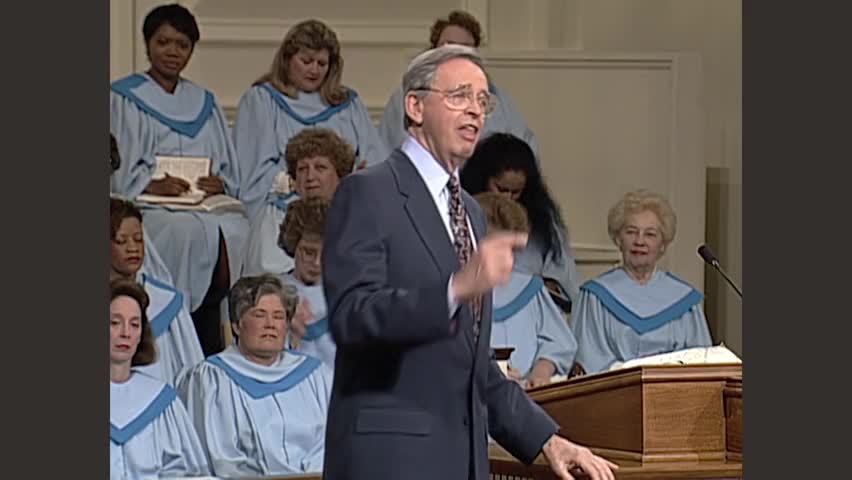
Dr. Charles Stanley: All of us enjoy being praised by someone who praises us sincerely. But when it comes to criticism, we’re not quite so delighted to hear that. When we think in terms of praise and criticism, the truth is all of our life we are going to get some of both—sometimes a whole lot of one, not much of the other. Criticism and praise are two things we have to learn how to live with. Both of them are powerful emotions making a tremendous effect upon our life. If you and I respond in the right way to criticism, it’ll develop us. If we respond in the wrong way, it can destroy us. So it is also with praise. If we respond in the right way, it can inspire us and motivate us. If we respond in the wrong way, it too can destroy us. I want to talk about how to handle criticism and praise. If you’ll turn to the book of Proverbs, the 15th chapter and the 22nd verse says: "Without consultation plans are frustrated, but with many counselors they succeed." Then if you’ll turn to the 27th chapter, notice here in the second verse: "Let another praise you, and not your own mouth; a stranger, and not your own lips." We don’t like criticism too much; praise we like a little better. Yet I want us to think about the two of these. Criticism is the most difficult to accept, but it’s the most profitable of the two. Whereas praise is the one that we love to hear the most of, but oftentimes can be destructive. That is, if we do not handle praise correctly, it can destroy us. If we do not handle criticism correctly, it too can destroy us. It’s very important we know how to handle both of them. Probably the most destructive could be praise because when a person becomes so self-centered, so self-interested, so prideful, arrogant, and self-sufficient, they are just absolutely headed for destruction because he says pride comes before the fall. Therefore, we have to be careful how we’re going to handle the praise in our life. Satan will take advantage of both of those in our life. When someone criticizes you, Satan will say, "See there, you don’t fit. You’re not worthy. You don’t measure up. You can’t cut it." That is a very demeaning thing from him. On the other hand, someone comes along and praises you, and what does Satan do? Satan says, "See, you’re number one. You’re the best-looking one. You’ve got it made. You’re the most important person in this business." What does he do? He wants to elevate you beyond what you ought to be. On the other hand, when you’re criticized, he wants to tear you down. Satan will take advantage of both criticism and praise that you and I have to deal with in our life. That’s why it is very important that we understand how to respond to both of them. How do I respond to criticism? Then how do I respond to praise? He says here certainly we are to let someone else praise us and not ourselves. When I think about criticism, I think about people who have a difficult time handling that. But what about praise? Do you realize that many people have just as much of a problem handling praise as they do criticism? For example, there are people when you say, "You did an absolutely fantastic job. That was wonderful." They’ll say, "Thank you very much." Then they will say, "Well, I didn’t really do it. God did it. It wasn't me at all." What they’re saying is they can’t handle the praise. Or they will say, "Well, don’t give me any credit because I don’t really deserve any credit for it." Somehow they can’t accept even a compliment. They can’t accept praise because somewhere along the way they’ve been so damaged they feel unworthy. Therefore, when you genuinely want to praise them and genuinely want to approve them and to exalt them because you think they deserve it, they can’t handle it. They are already emotionally convinced and persuaded that they’re either a failure or they don’t deserve it. They are not worthy. So when you praise them, it’s almost like pouring iodine into a wound. It stings. It burns because they think, "No, no, no, no, no, I don’t deserve that. Don’t praise me." We don't realize the awesome relationship and the power that we have in relationships. If we can’t praise someone and they can’t accept praise, one of the primary reasons is because they feel guilty. They look back in their past and they feel so unworthy about their life because of things that they’ve done in the past or things that have happened to them. You come along and tell them how good they look and how well they’re doing and how well they’re getting along in life, and somehow they can’t handle it. Something inside of them just will not allow them to enjoy. It is amazing. Some people hurt equally with praise and criticism. What you say or what you did not say is not the bottom line of their problem. The bottom line of their problem is something that happened way back yonder in their life they either will not acknowledge or will not deal with. It’s too painful to deal with. So what do they do? They cover it up. They push it. They do anything but look on the inside to say, "What’s going on inside of my life?" Why can you not accept praise? Why can you not accept a compliment? Why can you not accept criticism? What is it going on inside? Because it may come from different sources, different people. Are all these people wrong? Are all of them putting pressure on you because they want to compliment you? Are all of them wrong because they want to give you some word of advice or maybe express something? The truth is what’s life all about? Life is not all about things. Life is all about relationships. Life is all about learning to communicate with other people. Life is all about being able to listen and to hear what the other person said, not what I think they said or what I wanted to hear, but what they really said. Oftentimes, people will not even take advantage of opportunities because they don’t want to get into a crowd. They don’t know exactly how to respond even to criticism or to praise. So what happens? Instead of enjoying the things that God wants to do in our life, somehow we can’t. Think about this: the Lord Jesus Christ certainly is one who would praise us. How do I know that? Because I think when you and I do the right thing in a given situation, maybe it’s some temptation or something he challenges you to give and you do that, do you think God’s in heaven saying, "Well, you did pretty good"? No, I think God certainly praises us in the right fashion. Not because we did it, but because he knows it in our heart. We knew that he did it. We acknowledge the fact that it is he living in us and through us. God knows how to spot pride. You don’t have to wonder whether God’s going to get deceived or not. When we give him the credit and the honor for what goes on in our life and we do a good job of whatever he calls us to do, God is delighted in that. Another reason I know that is because in the judgment of the believers, at the Judgment Seat of Christ, when you and I stand before him, he’s going to praise us. What are rewards but praise? He says, "Well done, thou good and faithful servant. You’ve been faithful over a few things; now I’m going to give you more responsibility in life." What is he doing but praising us for a job well done? When I think about what he says in this passage, he says, "A man is tested by the praise accorded him." That simply means that you and I can look at other people and see how they handle praise. Some people can’t handle much. I realize in my own life that I have made a mistake at times praising and commending some people because I genuinely felt it with all of my heart. I was proud of what they did, proud of how they operated. But here’s what I’ve discovered: some people can’t handle all the praise we’d like to give them. Instead of them taking it and handling it in a wise fashion, what happens? It doesn’t just go to their heart; it goes to their head. Before long, they begin to send out the tentacles that they want more and more praise. They begin to live off of your praise. When you don’t give it to them enough, they turn and become critical. Some people just can't handle it. We have to be discerning not only to know what to praise, but how much praise can a person handle? Sometimes it destroys people because they cannot handle it. It goes to their head instead of their heart and then sifting it out through God’s plan and purpose for their life. The Scripture certainly tells us in Colossians chapter three that we are not to do anything in order to be men-pleasers. That is, we are not to do things to be seen of men. I want to give you a personal example of something that happened that happens to every pastor. When I began in the ministry in my very first church right out of seminary, I was just in my early twenties. I am sure that I can recall preaching and giving it my best, studying all week long, praying and asking God to give me the message. Then when I’d poured out my heart, I’d go to the door and stand at the door. I am sure that I wanted to hear people say, "That was a great sermon. That was wonderful. Pastor, that was just wonderful." I’m sure I liked that. Some Sundays people would go out and they’d just say, "Well, how are you doing? Happy to see you, pastor." They never mentioned the sermon, never mentioned anything I said. So that went on for a while, and I thought, "Wait a minute, what’s going on here?" I remember being down on the rug that I used to pray on in my first church. It’s like the Lord said to me, "Now wait a minute. Did you tell them what I said tell them?" "Yes." "Did you do it the way I said do it?" "Yeah." "Well, then why do you have to come back and get on your knees and get in depression because they didn’t compliment you?" Well, that sort of got my attention. I thought, "Lord, that’s exactly right. It doesn’t make any difference what they think. All I have to do is be obedient to God. If they praise me, fine; if they criticize me, it doesn't make any difference as long as I do exactly what God said do." Fine. Therefore, I had to learn early in life that if I’m going to do anything in the ministry at all, one thing I have to eliminate is what people think, or their approval. The way you accept criticism is the way you’re going to accept approval. And the way you accept praise is more than likely the way you’re going to accept criticism. You’re not going to like either one of them. If you’re not careful, you say, "Now I love praise, but I don’t like criticism." After a while, you know what you’ll do? You’ll say, "Well, they’re just flattering me." These two things that we have to deal with in life are so interrelated. In your family, in your business, among your friends, how we handle criticism and praise is extremely important. So how do we handle praise? I think this is the first and most important thing: if someone praises you, here's what you say: "Well, thank you very much. I certainly do appreciate that." That’s all you have to say. But you see, if you can’t handle the praise, if there’s got to be some kind of backlash where you’ve got to say something that excuses it or somehow explains it—you don’t have to explain it. When somebody says, "Well, you look wonderful today," just say, "Well, thank you very much. I appreciate that." What else do you have to say? You don’t have to say anything. If you say, "I don’t get very many compliments," well, take the ones you get. Enjoy the ones you get. How do you respond? You just respond by saying, "Thank you very much and I appreciate that," with a big smile. The truth is you don’t have to defend it, you don’t have to explain it. You don’t have to say, "Well, I worked real hard." You don’t have to give all those explanations. The truth is people don’t want them. If I walk up to you and said, "You did a great job at that. I just want to tell you, I’m really proud of you." All you’ve got to do is say thank you very much. I don’t need an explanation because I’ve already thought about it. You don’t need to explain it to me. I’m complimenting you because I’ve thought about it already and I like what you did and I want to say you did a great job. That’s enough. Just let it go at that. As a second thing in learning how to accept praise: look for the character quality in that person that caused them to say that. Ask yourself the question, "Why did they, what motivated them to compliment me in that particular way?" And you know, sometimes a person will in their compliments and in their praise, they will express something that went on in their life, or maybe some point of failure, or something that they learned by watching what you did. Just ask yourself the question: what is in that person's life that caused them to be able to see this in my life? We begin to learn how to discern how people think and why they think the way they do. But there’s another response that I think it’s important. That is to share with that person who praises you how that affects you. For example, if somebody says to me, "Well, I just really got blessed this morning and that really helped me," well, thank you very much. I appreciate that. And I just want you to know that telling me that’s a real encouragement to me. Somebody walked into the office back there this morning before the first service and gave me this testimony of how God had worked through him in bringing his father to salvation. It was a real story. I could honestly say, "Well, thank you very much for sharing that with me." It wasn’t a compliment or praise, but I’m simply saying he encouraged me by sharing that. So when a person says, "Well, by making that particular point, that really helped me," well, thank you, that encourages me to be very specific and very clear. We encourage other people when they encourage us. I think you need to say to them, "Well, that really blesses me and thank you very much." What happens is they get blessed in their praise toward you. If a person only sees it one way, it’s all coming their way, they’re not going to ever understand what love’s all about in life. If you can’t communicate, you can’t love. And if you can’t receive criticism and give it in the right kind of fashion, there’ll never be any kind of real genuine love that goes on in people’s lives. The last thing I would say here about accepting praise: I want to give you two words: deflect and redirect. That is, when praise comes your way, deflect it and redirect it. Now what do you mean by that? Well, let me explain this because you’ll say, "Well, that sounds like a contradiction of what you just said." You said when somebody compliments you or praises you, just accept it and say thank you very much. True. Now listen carefully. When they praise you, one of the wisest things you can do is to immediately think in your mind, "Thank you, Father." What you’ve done just in that simple whisper to the Father, or "Thank you, Lord Jesus," you’ve just let that praise run through you straight to him. You don't have to say it. It is an instantaneous acknowledgment that whatever happened, you just have to thank him for it. That will prevent you—if you will deflect and redirect—from becoming prideful. You will never become prideful in your life as long as you are genuinely redirecting those compliments and that praise where you genuinely feel it belongs. Because the truth is, I don’t care who you are and what you’re doing in life, but I can tell you this: you won’t do much by yourself. Whether it’s in the home or your business, the wise way to handle praise is to accept it and say thank you very much. The wise way to handle is to say, "What is it in their life that caused them to be able to see that in my life?" The wise way to handle it is to deflect that, redirect that, and share it with other people. If you’re in some organization, when they hear that you say that, it builds up their sense of self-esteem because they realize that in your praising them and sharing the praise, you are expressing their value in that business or in that ministry. You are expressing some of your dependence upon them. You are saying to them how important they are. When you and I are able to receive the praise, deflect it to where we know it should be shared—whether it’s your husband, your wife, your children, or your parents—what you’re doing is you’re accepting it in a godly fashion. No matter who you are, what the circumstance, if you and I can learn how to handle criticism and praise, both of these are growing elements in our Christian life. Both of these enable us to grow into Christlikeness. God will use both criticism and praise to grow us up and to make us godly men and women. Father, we love you and praise you and thank you and acknowledge that we don't have one single breath without you. Not one drop of blood apart from your grace to us, not any energy whatsoever. We have nothing apart from you. We owe you everything. We’re grateful that it’s that way. We wouldn’t want it any other way. And we pray that you’ll show us how to relate to other people, how to love them, how to receive their love, how to be a stimulation and the motivation and encouragement to them to do better in whatever area of life that there needs to be some improvement. And that we likewise be able to receive the praise and share it with those who deserve it, but most of all to say to you in a whisper of genuine gratitude: thank you, thank you, thank you, Father. For we ask it in Jesus’ name, amen.
Guest (Male): When you receive a compliment, accept it graciously and pass it along to others. That response will help ensure that praise does not feed your pride but encourages you and others. You can hear this message again at the link to Today on Radio at our website, intouch.org. For a copy of Dr. Stanley's complete message, "How to Handle Criticism and Praise," open the bookstore page to place your order. Log on to intouch.org, or you can call or text us at 1-800-IN-TOUCH. To write to us, address your letter to In Touch, P.O. Box 7900, Atlanta, Georgia 30357. Still to come, some final thoughts on how to graciously accept a genuine compliment. Today's Moment with Charles Stanley is on the way.
Guest (Female): In our spiritual journey, we often have questions. How do I know God's will for my life? Does God hear my prayers? Why do bad things happen? The answers are found in the Word of God. But how do we know where to start? The free In Touch Devotional can help point you in the right direction with biblically-based content from Dr. Charles Stanley. You'll gain insight and wisdom through daily devotions, Bible studies, and more. The In Touch Devotional, delivered monthly to your mailbox. Subscribe for free at intouch.org/daily.
Guest (Male): Tired of faith feeling like a performance? Worn down by constant striving? Jesus never meant it to feel that way. His call was always to something more: to a life that's generous, vibrant, joyful, and sustainable. A real life with him. That's the heart of "Follow Me," our book created to help you answer that call. Get your copy at intouch.org/store. You’re listening to In Touch. When someone gives you a compliment, do you struggle with your response? Practical guidance for believers is coming up in a moment with Charles Stanley.
Dr. Charles Stanley: I think this is the first and most important thing: if someone praises you, here's what you say: "Thank you very much. I certainly do appreciate that," and smile. If, for example, somebody praises you for something and you say, "Well, praise the Lord, just give God all the glory and the credit." Well, let me ask this: what about the other things that God does? Listen, let's just accept the fact that you and I were sinners saved by the grace of God. And we were saved by the goodness and love and mercy of God provided for us at the cross of Calvary. And now Jesus Christ has come to live on the inside of our life. And the Christian life is Jesus living his life through us by the power of the Holy Spirit. So that every single thing we do that has any value whatsoever is Christ expressing himself through us. If I know that and accept it as a fact, that means that when someone says to me, "Well, you did a great job," or "That was fine," or "You’re looking great today," whatever it may be to you, you just say thank you very much. Because the truth is if you and I believe what we say we believe, if Jesus Christ is our life, every single good thing that comes our way and comes from us and through us is him. It's Christ.
Guest (Male): You can learn more about surrendering your life to Jesus Christ at intouch.org. And if today's program encouraged you to invest more deeply in your relationship with Christ, we’d love to hear from you. Upcoming on In Touch, we’ll gain a better understanding of the incredible gift of God’s forgiveness. So I hope you’ll join us again on In Touch, the teaching ministry of Dr. Charles Stanley. This program is a presentation of In Touch Ministries, Atlanta, Georgia, and remains on this station through the grace of God and your faithful prayers and gifts.
Related Episodes
How to Handle Criticism and Praise - Part 1
Monday, August 10
God's Goal in Communicating
Saturday, August 8
Our Very Best Friend
Friday, August 7
Related Videos


About In Touch Ministries
In Touch Ministries is the broadcast teaching ministry of Dr. Charles Stanley.
About Dr. Charles Stanley
Dr. Charles Stanley
September 25, 1932 – April 18, 2023
Dr. Charles F. Stanley was the senior pastor of First Baptist Church Atlanta for more than fifty years. He was also the founder of In Touch Ministries and a New York Times best-selling author, who wrote more than seventy books encouraging people to seek Jesus as their Savior and know Him as their wise and loving Lord.
Known to audiences around the world through his wide-reaching TV and radio broadcasts, Stanley modeled his 65 years of ministry after the apostle Paul’s message in Acts 20:24: “Life is worth nothing unless I use it for doing the work assigned me by the Lord Jesus—the work of telling others the Good News about God’s mighty kindness and love.”
Contact In Touch Ministries with Dr. Charles Stanley
Mailing Address
In Touch Ministries
PO Box 7900
Atlanta, GA 30357
Phone Number
1-800-468-6824

