When the Light Finds Us, Part 1
Ministries > Family Talk with Dr. James Dobson
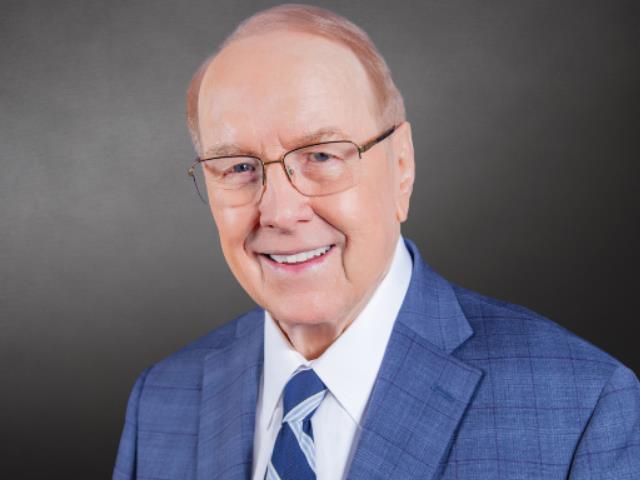
Anger leaves us with two choices: grow bitter or choose to get better. On today’s edition of Family Talk, Roger Marsh welcomes Judy Henderson and her daughter, Angel McDonald. In 1982, Judy was sentenced to prison for a crime she did not commit. She shares how Christian volunteers behind bars showed her that God’s love was real.
Dr. James Dobson: Welcome everyone to Family Talk. It's a ministry of the James Dobson Family Institute, supported by listeners just like you. I'm Dr. James Dobson and I'm thrilled that you've joined us.
Roger Marsh: Well, hello and welcome to Dr. James Dobson's Family Talk. I'm Roger Marsh and on our program today we have a couple of guests who have a truly remarkable story. But first, I want to read from one of our guest's brand new book to further introduce you to her. Imagine losing everything you love in a single day. Your home, your children, your freedom. The pain drops you to your knees, but as your tears dry, you face a choice. Do you stay broken or do you stand up and rebuild? These are the words of author Judy Henderson, who in 1982 was sentenced to prison for a crime she actually did not commit. After 36 years of unwavering faith and persistence while incarcerated, Judy was in fact granted clemency in 2017 and fully pardoned in 2018. She has now written a book about her experience called When the Light Finds Us from a sentenced life to a transformed one. And Judy Henderson is joined by her daughter Angel McDonald to join us on today's edition of Dr. James Dobson's Family Talk. Judy and Angel, welcome to the broadcast.
Judy Henderson: Thank you very much. Thank you. It's such a great honor to be here and to be able to tell what God has done for our family.
Roger Marsh: When I think about people who have been ministered to in prison and that I think of doctor's relationship with Chuck Colson, the founder of Prison Fellowship and how close they both were. So when we came across your story, Judy, we were just mesmerized by it. So let's get a little background here before we get into the the really meaty part of the story. What was it like for you when you're growing up? What was your upbringing like? Your childhood? Obviously a lot of kids have some joy-filled memories, but there are also some painful memories as well. Talk about that if you would.
Judy Henderson: So I'm the oldest of eight children and my father was not what you would call the the ideal role model. Uh he was very abusive to our mother and to us. I always tried to take the brunt of it because my other siblings were younger than myself and so it was hard to try to at that age to know how to navigate or even learn what a healthy family life was actually about. Even though we did um later on in my younger years, we did in Defiance, Church. I wasn't it still wasn't healthy behind closed doors. Um and when my mother would speak to the minister about it, he would just tell her back then that's how you deal with family matters is behind closed doors.
Roger Marsh: Um
Judy Henderson: Um and then at the age of 17 I was sexually molested by um uh man of the cloth, an assistant pastor, a youth pastor. My dealings with seeing how, you know, the Christian life or I guess you would say um look to me uh caused a lot of pain. A lot of anger.
Roger Marsh: Yeah Christianity didn't look like a safe place, did it?
Judy Henderson: No, it did not. It did not. And so I ended up getting married and we had two children, of course, Angel and uh my son Chip.
Roger Marsh: How old were you, Judy, when you got married?
Judy Henderson: I was uh 19 well 18 and I had her when I was 19. And uh we couldn't date, you know. So this was the first um boy I'd ever dated and um ended up being the father of our two children
Roger Marsh: Okay.
Judy Henderson: and which that was the joy of my life is my daughter and and my son and of course I named her the right name, Angel.
Roger Marsh: We'll talk more about that later in the conversation because she really was an Angel for you, but now when you met Charlie, it seems like you kind of met a carbon copy of your dad. Is that true? Is that
Judy Henderson: Yeah. She was. I did. Yes. And it's like learned behavior, you know. I always tell people, the battered women, sometimes our brains are wired a little differently than somebody that's been raised in a household of um you know love and and protection and um we become passive, we become, we don't ask questions. We just try to do whatever we need to do to keep the peace. But after 12 years I was able to walk away from that divorce or that marriage and then when I was uh afraid that the anger may turn toward my children and toward Angel. And uh I ended up in a psychiatric ward.
Roger Marsh: Um Um
Judy Henderson: So that's just I'm going to give you a short time span of how quickly
Roger Marsh: Sure.
Judy Henderson: somebody's life, I don't care if you're a middle class housewife, uh a mother and a working mother at that, your life can change in a way that you never would have expected it to do. And so like I said, I ended up in the psychiatric ward and then from there I was told to move down where my family was, which I did. I bought a business in February, met my co-defendant in April. He moved into my house unbeknownst to me in June. July the murder took place.
Roger Marsh: Wow. Now look we went through a lot of material there very very quickly. And I can hear Angel kind of, you know, humming along in the background saying yep yep mhm. Let let's talk about Greg because this is a guy you meant you mentioned that you had started a business, you'd moved back closer to family. You were basically in a a situation where you're in rebuild mode and things are going very very well for you. And then you met Greg and when you first met Greg, there were no red flags per se, were they?
Judy Henderson: Correct. Not that I noticed but like I said, I didn't ask questions. So and I I probably wouldn't uh have at that time, Roger, even um because I was already learned behavior of of not asking questions. It was I was trying not to ask questions because too many questions could cause an argument or cause why do you want to know or um so I just tried to just make things peaceful and and tried to do what I could to keep my children safe and um then whenever I met Greg, I didn't even look for any red signs.
Roger Marsh: Mhm.
Judy Henderson: I don't know that I would have known them had I been like I was then. Today of course I would because I've been fortunate to have years of therapy.
Roger Marsh: Sure. Mhm.
Judy Henderson: But at that moment, no I was not.
Roger Marsh: I would imagine that having been through what you'd been through in terms of the the time in in the hospital and and then coming out of that and moving forward, you probably didn't even realize the fact that you had learned how to protect yourself from, you know, well if I do this then this won't happen and you know I I I know how to walk through the minefield. So when you meet a guy like Greg, you're not looking that way because your brain is telling you I I'm good. I'm good. Where was your faith at this point? I mean you mentioned that you were kind of a church on Sunday, but the family endured abuse and then you were sexually abused by someone in the clergy. Where where was God in all of this at that point?
Judy Henderson: Yeah. Uh Right. God was not a part of my life at that time. Um you know I just tried to navigate my moving forward on my own. And uh even my parents, uh my mom and stepdad at the time, they thought that he was just super nice guy. He had also been in the ministry at one time
Roger Marsh: Mhm. Mhm.
Judy Henderson: as a pastor and uh he was a real estate broker at the present time. And he was very kind, very polite, very nice, never acted suspicious of me, never acted like I um you know like my ex-husband, I smiled too much or I was too friendly or I never saw any signs of jealousy or anything like that. It was just just normal like you know like you would if it was a good marriage or a good relationship.
Roger Marsh: Right. That's interesting. Judy Henderson is sharing her fascinating testimony with us today here on Dr. James Dobson's Family Talk. She's written about it in a brand new book called When the Light Finds Us from a sentenced life to a transformed one. And we have that link up at drjamesdobson.org. Okay, take us again through that jet tour of I own a business, I meet Greg, I'm being arrested. I mean that happened way so way too quickly. And at that time you've got a business that's working well. You've got a great new man in your life who you trust and you think this guy's a a wonderful guy. And then all of a sudden that one faithful night your world just literally turns upside down. Kind of walk us through that one. Take your time with us if you would.
Judy Henderson: Yeah. Right. Correct. Yes. It was something that I totally I unexpected. I never knew that he had a dark side. I didn't know very many of his friends. Uh actually I can't think of any that I really knew now that I think back. He had people that he associated with, but I didn't know much about them. And like I said, I didn't ask questions. Um whenever he chose to um want to meet this man and uh have a meeting with him, um I was willing to help set that up because I happen to know the gentleman um vaguely through a friend of mine in Kansas City that was dating him. And so that's how I knew of the victim. Because my co-defendant knew that I knew him that way, he could make he thought I could make the arrangements where they could meet.
Roger Marsh: Mhm. Mhm. Oh very interesting that you were being set up to play a part in all this. And we mentioned at the start of the program, eventually when things went south, you were convicted of a crime that you didn't commit. But just for for point of clarification, there was a crime being committed and you were inadvertently drug into this.
Judy Henderson: Yeah. Correct. Correct. Mhm.
Roger Marsh: Okay. Okay. So up until the moment when everything's going haywire, you didn't realize you were committing a crime.
Judy Henderson: No, I did not think that there was going to be anybody harmed or anything happened to the victim at that time.
Roger Marsh: That's incredible. Now Angel, you were how old when your mom went through all this?
Angel McDonald: The crime happened the day before my 13th birthday.
Roger Marsh: Oh my. What a what a volatile time. What was your take on Greg? I mean did you see your mom happy and in this new relationship and you're starting to think hey things are turning around for us?
Angel McDonald: Uh no, but as again I was 12 years old, get ready to turn 13. So I actually had wanted my mom to myself, you know, for the first time. And so I saw Greg a lot differently like he was coming between the two of us because or I mean and my brother because he just kind of came in and took over, I felt like. So it was interesting reading the book because I got a different perspective of how she was feeling at the time versus how I was feeling as a young kid. That was like no, finally we have peace, we have you know. I didn't I didn't care for her to find love. I guess that sounds terrible.
Roger Marsh: Yeah right right. You're 12 13 years old, you want your mom. I mean there's nothing nothing wrong with that.
Angel McDonald: Yeah I want my mom and I don't want anybody and I probably didn't trust somebody to come in and be with her, you know. I mean I didn't know any of that until now when we're reading the book and looking back and I was like oh I get it now.
Roger Marsh: Yeah. Well that's good. And then Judy, I know that as the inventor and unfolding here, of course you also are mindful of the fact you have a daughter and son at home who are about to be impacted by this. You and Greg were arrested, you were flown back to Missouri, you were put on trial. Did you ever think that you would be convicted and then sentenced to prison at that point?
Judy Henderson: Yeah. Absolutely not. That was the farthest thing for my mind. Whenever I got arrested, I thought I would be safe and and not because I never thought I would make it back from Alaska. I thought that um he would kill me somewhere there or somewhere you know along the line. I would not be back to see my children or my family.
Roger Marsh: So you you go to trial, you're in Missouri now, you're up on trial and then when you basically tell the truth about what happened and it winds up being used against you and all of a sudden you're being sentenced to prison. Take us through what that was like because I'm sure it just had to really blow your mind to say look, I'm telling you that I didn't know what was going on and they're saying we're telling you letter of the law, you're going to jail.
Judy Henderson: Right. And I because I was the oldest of eight, I was still very protective of my family and my mother and whenever they found me guilty because I do want to point something out, Roger. We did have the same attorney representing both of us.
Roger Marsh: Yeah. Interesting.
Judy Henderson: Which was a serious constitutional conflict of interest. And I could not take the stand and tell the truth without hurting my co-defendant because the attorney said you can't get up there and take the stand. He's also my client. So if you're going to take the stand, you have to get up and come up with an alibi witness that you were with your mother shopping or something to that effect. I refused to put my hand on the Bible and tell a lie.
Roger Marsh: Yeah he told you to lie and that's not going to work.
Judy Henderson: Yes. Yes. No, I would not do that. I refuse to do that and nor would I ever not only that, but I would not ever implicate my mother in any way whatsoever or my a family member and put them through that. There's no way. I didn't know what God's plan was, but I knew whatever it was, I would be okay. I would be okay. I I would come home. And uh but I could either get the death penalty or life without parole for 50 years.
Roger Marsh: Unbelievable. Now the crime itself, you know, warranted a death penalty. So obviously there's a capital component in that. So now you're in prison. And what was it like telling your daughter and son mom wasn't and you didn't know when you're describe, if you can, walk that through with us cuz I know that hasn't been easy for you, Angel, to hear and read about this. But Judy, what was it like for you to tell them?
Judy Henderson: I was devastated, you know. I because I I love my children. My daughter and I, we would do things together. She always had sleepovers or I'd take them to Worlds of Fun or you know when she had a birthday and I always tried to make things special for her. I had her in dance classes and acrobats and everything that a modern, you know, suburban mother would do with her children. So the thought of not having them with me was unbearable, yet I had to pretend that I was okay cuz I did not want them to worry about me. I didn't want my family to worry about. And it wasn't even myself that got to tell my daughter. And she will be able to tell you that aspect of it, how she found out.
Roger Marsh: Yeah. Angel, how what was it like for you? You just turned 13 and you're finding this out.
Angel McDonald: Yeah. Well and I didn't find out for a while. They just said my mom left. So for about five months or so um I didn't know where she was. I just know knew that she had to leave. And then after she was arrested and we were on our way to Springfield for the holiday, my dad told me that what the truth was, that she had been arrested, but um somebody had passed away, but she was going to be free, that she didn't do it. And so um when the trial took place, I was actually at her tanning salon with one of her workers because my grandma had continued with her business. Um and I had in my mind that she was going to be set free. So I had actually called a radio station and asked them to play a song Endless Love. You know what that song is. And um for my mom, Judy Henderson, and they were like Judy Henderson is your mom? And I said yes. And so they were like oh okay. And the next thing I heard, I was waiting for the song to play and they said that she had been convicted of murder in the first degree. So um so it was really hard.
Roger Marsh: They announced that on the air without telling you. Yeah. So you're listening for a song dedication for your mom and instead you find out she's been Oh my goodness. Angel, I'm so sorry that happened to you. On behalf of every broadcaster everywhere, I'm so sorry that happened to you.
Angel McDonald: Yeah. Yeah. Yeah. Thank you. I appreciate it, but so I was really upset cuz as you know I was 13 and I you know was expecting her to come home and then all my family was at the courthouse. So um I was really really mad at at Jesus, really really mad. I remember that my grandma and them came and got me. And uh she hadn't been sentenced yet and took me to her house and wanted to pray. And I was like no, I don't want to pray. You know I don't God God's taken away my mom and my family. And um and so she did taught me something in that moment. She said okay, you don't have to pray, but I'm going to pray over you. And it's you know I look back just now and I realize I've done that for so many other people that didn't have this strength or the belief to pray. But I prayed for them. And it it made a difference, you know, and stuff. So so it was really hard to walk through, but um you know God always has a plan and and you know I learned that in a young age.
Roger Marsh: Yes. You know I it's such a tender moment and memory even right now. And uh Judy, I mean I I I your emotion is is so raw and so real and and here you are in this situation where you were completely hoodwinked. I mean in terms of how this all came down. And then got horrible legal counsel from a lawyer who should never be practicing law to be taking on both of your cases at the same time. And now you're dealing with that emotion that that your your mind is just racing, I'm sure. What was what was the adjustment period like for you when you went into prison? Because obviously you were thinking all I have to do is tell the truth, I didn't do anything wrong. And now you've been convicted.
Angel McDonald: Right. Well for one, I'd never been arrested, no one in our family had. So I had no idea what I was walking into and it was like such a dark, dreary, horrible dungeon type environment and everybody was sad, everybody was angry. Um I didn't know how to speak the language of prison. I didn't know what a lot of terms meant that uh they came up with there. I didn't understand their policies, procedures, everything was foreign, just like dropping you off into a foreign country and you didn't know the language. Um there was a um career criminal that became um what I thought was a friend of mine that I'd met in the county jail, but come to find out um she had uh taken a contract that Greg, my co-defendant, put out on me. And um I was told that by another offender. So um because he hadn't went to trial yet, so he was fearful that I was going to turn state's evidence.
Roger Marsh: Interesting. I was going to say what was his sentence, but that would make I mean I I don't doesn't make sense. I understand why he would be thinking that way. That's incredible. Wow.
Angel McDonald: Right. Yes. And um so I had to do what was necessary to save my life, but it also established me in general population with other offenders because I was always nice, kind, polite, smiled all the time. And in prison they take kindness for weakness.
Roger Marsh: Mhm. Right.
Angel McDonald: So it's a very thin line that you walk in order to stay safe and to understand what's going on around you.
Roger Marsh: There's a quote from your book I love love to get your reaction to it, Judy, just as we're uh coming to the the end of the first half of our conversation. You said I had to become someone new, someone as hard and cold as prison steel. I said about building this new self with desperate intensity, burning away every soft edge and vulnerability to frighten young mom I had been had no place here.
Angel McDonald: Correct. And I I did not like that person that I was and I was very angry, very I had a serious hard to hard talk with God and very raw, very transparent because I wanted him to know how angry I was and I believe that God understands, you know. We have these emotions and we can be honest with him. He's like our father and we can be we can be transparent with him. He already knows anyways. And um but I was um you know I always tell people there's two things you can do with anger. You can get bitter or you can choose to get better.
Roger Marsh: Amen.
Angel McDonald: And God I do not believe God creates bad situations. I think we make bad choices with what how our life is going to be. And um so I I had to look at things like uh maybe I did you know even though I didn't commit the murder um I could have made other choices that could have caused it not to happen.
Roger Marsh: Right. And um so for those reasons, of course I take responsibility for the pain that it caused his his family and um but through that through all of that and through the love that I had for my children and my family, that motivated motivated me to not give up. You know I knew that God was in this somewhere, somehow and it took me going to a three-day retreat put on by Christian volunteers that got me to see that God's love is real. He does care for us. And whenever they washed my feet, it was such a humbling experience that I thought you know these people, they are showing the love of God. You know they don't know me. They they just see a convicted killer. And that doesn't even matter to them. They do not care. You know they are there to to comfort us, to love us and show us what Jesus is really about. And that got me on a better path. It helped me, it fueled me and it gave me hope that I knew God was in this situation somehow, no matter how long it took. I never stopped believing that God was not going to turn this around and I would be free. I had a verse above my mirror in my cell, Jeremiah 29:11. I know the plans I have for you, plans for a future, plans to prosper you, not to cause you harm. So this was not God. This was not him causing this this situation. It was the enemy trying to kill, steal and destroy like he does every Christian family and every person on this earth. And I refused. I already let one situation destroy me and I was not going to allow the enemy to do that. Well that is a powerful way for us to conclude part one of our conversation here. We're just getting into the good part because Judy is of course now has found Christ behind bars and and of course now she's talking to us from her office and she's no longer in prison. There's an incredible footnote to this story, but we're out of time for today. Judy, can you and Angel join us again next time as we'll continue this conversation on Family Talk? Yeah. We would love to, of course. You can get bitter or you can choose to get better. After everything Judy Henderson endured, those words carry tremendous weight. Her circumstances hadn't changed. She was still behind bars, but God was beginning to change her heart. You've been listening to a special edition of Dr. James Dobson's Family Talk, featuring part one of my conversation with Judy Henderson and her daughter Angel McDonald. Judy's been sharing her remarkable story, which she writes about in her book called Where the Light Finds Us from a sentenced life to a transformed one. You'll find a link for the book as well as today's program at drjamesdobson.org. You know for decades the ministry of Family Talk and the Dr. James Dobson Family Institute have shared stories like Judy's because they remind us that no life is beyond the transforming power of Jesus Christ. And your prayers and faithful financial support help us to continue to bring biblical truth, encouragement, and hope to individuals and families each and every day all across the country. To make a donation online, visit us at drjamesdobson.org. If you prefer, you can speak with a member of our constituent care team. That number is 877-732-6825. That's 877-732-6825. Well I'm Roger Marsh and on behalf of all of us here at Family Talk and the Dr. James Dobson Family Institute, thanks so much for joining us today. Be sure to tune in again next time for part two of Judy and Angel's remarkable story. Judy Henderson spent 36 years in prison for a crime she did not commit, but her story is far from over. You're going to hear the exciting conclusion coming up next time right here on the next edition of Dr. James Dobson's Family Talk, the voice you trust for the family you love. This has been a presentation of the Dr. James Dobson Family Institute.
Related Episodes
When the Light Finds Us, Part 2
Friday, October 30
Softening a Crusty Heart
Wednesday, October 28
Messy Mourning, Part 2
Tuesday, October 27
Related Videos



About Family Talk
Family Talk is a Christian non-profit organization located in Colorado Springs, Colorado. Founded in 2010 by Dr. James Dobson, the ministry promotes and teaches biblical principles that support marriage, family, and child-development. Since its inception, Family Talk has served millions of families with broadcasts, monthly newsletters, feature articles, videos, blogs, books and other resources available on demand via its website, mobile apps, and social media platforms.
The Dr. James Dobson Family Institute (JDFI) is a Christian non-profit ministry located in Colorado Springs, Colorado. Founded initially as Family Talk in 2010 by Dr. James Dobson, the organization promotes and teaches biblical principles that support marriage, family, and child development. Since its inception, Family Talk has served families with broadcasts, monthly newsletters, feature articles, videos, blogs, books, and other resources available on demand via their website, mobile apps, and social media platforms. In 2017, the ministry rebranded under JDFI to expand its four core ministry divisions consisting of the Family Talk radio broadcast, the Dobson Policy and Education Centers, and the Dobson Digital Library.
Dr. Dobson's flagship broadcast called, “Dr. James Dobson’s Family Talk," is aired on more than 1,500 terrestrial radio outlets and numerous digital channels that reach millions each month.
About Dr. James Dobson
Dr. James Dobson is the Founder Chairman of the James Dobson Family Institute, a nonprofit organization that produces his radio program, “Dr. James Dobson's Family Talk.” He has an earned Ph.D. from the University of Southern California and holds 18 honorary doctoral degrees. He is the author of more than 70 books dedicated to the preservation of the family including, The New Dare to Discipline, Love for a Lifetime, Life on the Edge, Love Must Be Tough, The New Strong-Willed Child, When God Doesn't Make Sense, Bringing Up Boys, Bringing Up Girls, and, most recently, Your Legacy: The Greatest Gift. Dr. Dobson served as an associate clinical professor of pediatrics at the University of Southern California School of Medicine for 14 years and on the attending staff of Children’s Hospital of Los Angeles for 17 years in the divisions of Child Development and Medical Genetics. He has advised five U.S. presidents and served on eight national commissions. Dr. Dobson has been married to Shirley for 64 years, and they have two grown children, Danae and Ryan, and two grandchildren.
Contact Family Talk with Dr. James Dobson
540 Elkton Drive
Suite 201
Colorado Springs, CO 80907
Phone Number
877.732.6825

