Redeeming Justice, Part 2
Ministries > Family Talk with Dr. James Dobson
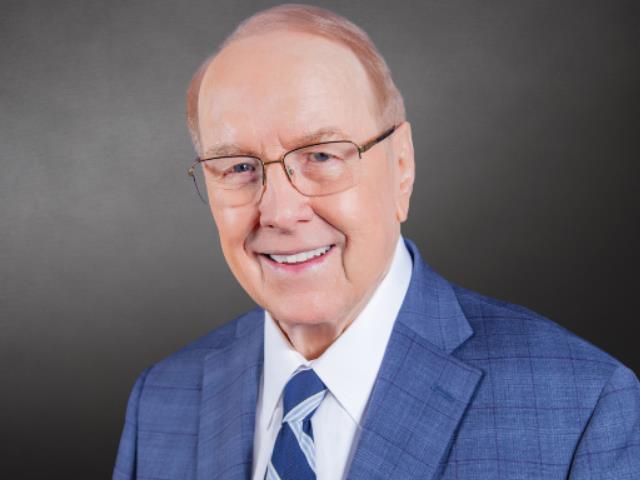
Many young people in Gen Z rank social justice above everything else, yet they’re learning about it from social media, not from the sound doctrine of Scripture. On today’s edition of Family Talk, Roger Marsh continues his informative discussion with Dr. Christina Crenshaw, author of Redeeming Justice. She explains how parents and grandparents can guide the next generation, and how Christians can partner with culture where it’s correct and take a stand where it contradicts God’s Word.
Dr. James Dobson: You're listening to Family Talk, the radio broadcasting division of the James Dobson Family Institute. I am that James Dobson, and I'm so pleased that you've joined us today.
Roger Marsh: Well, welcome to Family Talk, the broadcast ministry of the Dr. James Dobson Family Institute. I'm Roger Marsh, joined again for day two of our fabulous conversation with Dr. Christina Crenshaw, assistant professor at Arizona Christian University. She also serves in the university's Cultural Research Center as a fellow alongside our good friend and colleague, Dr. George Barna. She's the author of a brand new book called Redeeming Justice, Doing Good for God's Glory. We have a link for the book up at JDFI.net. Dr. Christina Crenshaw, welcome back for day two here on Dr. James Dobson's Family Talk. Yeah, thank you for having me, Roger. I'm really impressed with the fact that you started your academic career as an English teacher, basically, and moved into this space, because typically what I've seen, my, I have 3 kids, my wife Lisa has 3 kids, so in our little Brady Bunch family, we've got 6, and my 2 daughters have gone into academia, and both of them ran into this in college. They went to State University in California, and the lower division, you know, undergraduate portion always had some kind of English requirement, writing assignment. Almost every assignment they got was political in nature. And it was, you know, and it was California, so of course, you know, it was, you know, why we should have same-sex marriage in the state legalized, that type of stuff. And I thought, well, no way, what does this have to do with English, right? I get really frustrated when they talk about these reports they had to do. But in our first conversation on the last edition of Family Talk, you really made a case for the fact that, wait a minute, this is kind of a natural extension, if you will, of your life in ministry, not only taking you all the way up through your PhD studies in education and now this new book, but encouraging believers to say this is the space that we should be inhabiting, not as quote unquote social justice warriors, but as biblical justice ambassadors. Talk again for those who might not have heard day one as to why this ministry is so important to you.
Dr. Christina Crenshaw: Yeah, so I would say, first of all, I'm not surprised that your kids had that experience at a state school in any state. but I do think one of the things I try to do in my classroom, I did this when I was teaching high school, and the majority of my career has been teaching at the college level. And, there's a little bit more academic freedom, the kids are more mature, you can have the deeper conversations, but literature is deeply political by nature. I just finished at Arizona Christian, a women's literature course, and you know, we started with like the Catholic mystics, and we got all the way to Alice Walker, and it's deeply political. But what I try to do with students, and my book does this as well, is I say, hey, let's hear the heart of what they're saying, and let's see where we can partner, and then let's be very clear about where we have to reject, where we have to depart. So it's this concept of I partner and depart. And so, for example, you know, with Alice Walker, I say, okay, Alice Walker, you know, second wave feminist, is really concerned, deeply concerned about the subjugation of women. She feels like women haven't had a seat at the table. we, you know, Title IX hasn't been established yet. There are a lot that we can look around culturally and say, hey, wait a second, we just finally got the right to vote, but we can't really go to college. We don't have scholarships. We don't have safe sports spaces. You know, there's a lot here that as Christians we can say, wait a second, this isn't really God's best. This isn't what Jesus had in mind when he talks about elevating women. And so I say, as Christians, we can actually partner with what Alice Walker is saying here. But then we get into some of her sexual revolution literature, you know, places where, you know, her own daughter Rebecca writes a kind of a hit piece where she says, my mom didn't value being a mother, and my mom allowed me to get an abortion at 14. So, the fruit of Alice Walker's own mothering was pretty rotten. And so I say to my students, I'm like, and as Christians, we see that she's not actually valuing motherhood. She's not actually valuing life. She's actually placing a false value and a place where as Christians we can't partner on free sexuality. And so in the book I try to present that as well, where I say, hey guys, where have people who are coming from a humanistic or secular perspective, gotten it right enough where there's enough common ground and concentric space where we can partner and support? Because we can't just live like Benedict model where we're going to start these own enclaves and we're going to have our own Christian everything, our own Christian Starbucks. But what we can do is say, I am so sorry, what you're promoting, what you're saying here, I can't partner with because it actually is in conflict, is antithetical to what the Bible says to be true. And so on this point, I have to depart. So the book does that as well with social justice. Where are there places, you know, the Red Cross or, you know, I'm actually really thankful for the Salvation Army. They have a long track work record of doing great work. And so there's so much I could partner with, Habitat for Humanity. But then there are places where I see, you know, that I don't think I put this example in the book, but here's one for your listeners, where there was a big adoption agency in the past couple of years that said, we're going to allow same-sex adoption.
Roger Marsh: Mm, mm-hmm.
Dr. Christina Crenshaw: And so we pulled our funding from that organization, and the place where we give to as a family, even had to vet them and say, you can't be part of our coalition anymore because what you are promoting is actually anti-biblical. It's antithetical to God's word. And so I think that's just where as Christians, we have to use discernment on where we partner with social justice and the narratives that we promote, and we should look for common ground when we can find it, but never at the expense of God's word and never placating the culture, in order to appease them over upholding God's word.
Roger Marsh: Yeah, I understand that there have been times throughout history where people of faith have had to mute certain parts of that if they're going along with the culture. We had friends years ago who, were, he was a high school teacher and she was a caterer, who did a wonderful business, and they heard a missionary from Wycliffe Bible Translators, and they said, that's it. Randy was hooked, he wanted to go. They went to Papua New Guinea, he wound up being a teacher in that area. They spent years in New Guinea as missionaries, and I realized that, the first few years they were there, they said, look, we're working with indigenous people. We have to learn everything about what they're doing before we can actually start translating God's word into a language that they'll understand. And so there are certain things I know that this, these people had polytheism and things like that. You sit there and go, well, okay, I'm going to have to maybe mute this for a little bit because they wouldn't understand it so we can get that deeper understanding. I don't know that in the United States of America right now in our culture, Dr. Christina Crenshaw, that we're at that point where a Christian would need to, I mean, be gracious, obviously, present your testimony with gentleness and respect, as 1 Peter 3 says, but I don't know that we're at a point where we would need to mute anything, is there? I mean, we should be able to be, quote unquote, be Christian and live out our faith in doing biblical justice, right alongside the people who are doing social justice and saying, trust me, I mean, you're going to see our way's better.
Dr. Christina Crenshaw: Yeah, you know, I taught a class last semester, a humanities class, where I had to actually teach like the Federalist Papers and, you know, the Founding Fathers, and it was so good for me to revisit that because I hadn't since undergrad. And they were such wise men, not perfect men, and some of them had some kind of like wayward theology, but largely they really were approaching the foundation of our country from a, again, Judeo-Christian perspective, from a biblical worldview. They understood that men are not angels, that we are fallen creatures, Right. And that we need these biblical bumper guards or we're going to go off the track. and so to your question, mo- Western culture, you know, the UK too, and definitely in America, we have experienced such religious liberty and such a rich Christian heritage that there really is no excuse to shy away from that. What has happened, unfortunately, is that culture has become increasingly pluralistic. And then, even though pluralism has a lot of common ground and there are circumstances where it can be a good thing, it's become increasingly secular. And we know secular doesn't mean neutral. Secular just means anti-God, right? And so I think to your question, Christians don't have any legal reason to shy away from sharing the truth. We don't have, we have a rich history and tradition in America of being able to stand on God's word, and I think that that's just a place for us that the subtitle of the book says is just to reclaim. Now, my advice to people is always do it with more humility than hubris, but do it in a way where you, again, are not placating God's word. So you can say things like, I am so sorry that this teaching makes you feel that way, but I want you to know that that is not how I intend for it to land. That's not how God intends for it to land. God wants freedom, redemption, and restoration for you, and maybe that doesn't feel that way, but that is the truth. And it's just kind of, again, like as scripture commands, like speaking the truth in love. And love is another word that has been hijacked, unfortunately. You know, like, we have had to, I think, as the body of Christ, like, really come back to a biblical understanding of love. Love does not mean making everybody feel good. Love does not mean tolerating all kinds of, you know, sin or untruth. Love means I care about you so much that I want you to experience freedom in Christ, because Scripture says the truth will set you free. And so love and truth are synonymous. They have to be wed together, they have to be joined together, or you don't have love, because love without truth isn't really love, it's a lie, right? So we have to find that way to say, hey, I hear my words, they are seasoned with love, they are the impetus, the catalyst for this is really freedom in Christ. Mm. And so sometimes that will mean that people mishear us or it lands wrong, but I think if as long as we can stand before the Lord and say that I chose my words, in a way that I wanted to lead others to Christ, that I was hoping to present truth that set them free from a lie, that is really all you can do. That is giving an account, as Paul says. Like, that is the apologetics within us. I'm giving an account for what I believe to be true. Um, yeah, and then I think there's, like, a real beauty in being like, "Hey, sorry, it's not me, it's God." You know, these are my words today. You know, when people say things like, "Oh, well, don't judge," it's like, "Oh, you- I- I'm a lot easier of a judge. God's holy and righteous standard, that's- that's the judge you need to be worried about. Don't worry about me, judge. My standard is not God's standard.
Roger Marsh: I love that. I have a seminary prof who used to say his favorite expression was blame Jesus. You know, if you got an issue like that, that's where it comes from, and that's the source of all of that. Dr. Christina Crenshaw is our guest today here on Dr. James Dobson's Family Talk. The book is called Redeeming Justice, Reclaiming God's Vision for Doing Good in the World, and we have a link for it up at JDFI.net. Let's take a look, Dr. Crenshaw, at what we are talking about here moving forward, because I know there's one place, and you don't have to go into all seven of these, but there is an instance that you have in your book where you talk about the redemptive justice and some places where throughout history there, what you call God's justice playbook. Give us one example, if you would, of one of these seven expressions of what biblical justice looks like played out in the culture, because as your friend or your colleague, my friend and colleague too, Dr. George Barna would say, one of the biggest challenges we have right now isn't so much that Christianity isn't being lived out, it's that it's been watered down and almost made counterfeit by syncretism and the fact that people have this, kind of buffet table mentality when it comes to I'll take these parts of Christianity and these parts of Islam and put together something that makes me feel good. And so people wouldn't know what biblical justice looks like, because a lot of people don't know what scripture looks like.
Dr. Christina Crenshaw: Yeah, so in that section of the book, in the last part on biblical justice, I leaned very heavily, and I cite Timothy Keller, looking at, and then of course my own seminary studies. I wrote a paper on this, knowing that I wanted to write a book on redemptive justice, on redeeming justice. And so when I had the opportunity to write a paper on it in seminary, I took it. And looking throughout scripture of different ways that God expresses or uses even Hebrew and Greek words to discuss justice. There may be 10, there may be 5. I came to terms with 7. There were 7 ways that I saw God's expression. And to give, kind of two, these are sort of the two that I start off with, is we look at retributive justice, which is the idea of like when we look at an eye for an eye. And then there's places of like distributive justice. So when God says, hey, I want the people who are marginalized and disenfranchised to have the right to glean the field after it has been harvest. That would be an example of like distributive justice. The year of Jubilee would be another example. I think, you know, culture would hijack that and say, well, that's socialism and God is a socialist, but then I might, no, no, no, because there's five other parts. Well, there's six other parts, but, you know, five other ones that I haven't, you know, even brought to the table in this discussion. And so when we just needle down one expression of God, we're not getting a complete picture of justice. But yes, God does talk in the Old Testament about an eye for an eye, and he does talk in the Old Testament and the New Testament as well about distributive justice, ways that we are to be beyond charitable. But we know now that we've got Old Testament and New Testament and 66 canonized books of the Bible, that the macro narrative here is and has always been God's redemptive plan, and that is what's so unique about God's plan for biblical justice that is we're able to discern from social justice is that it's redemptive. So when God says an eye for an eye, it was part of his redemptive plan to say, hey, you need some grace, don't you? Because you can't, you've only got two eyes, you can't keep picking them up. You can't keep chalking my pants, right? You're out of hands, you're out of eyes. It turns out you need Jesus. You need God's atoning grace. You can't do this justice thing without me. You're going to fail against my holy and righteous standard every single time. There's not enough animals to slaughter. And so he gives us Jesus. That's part of his redemptive justice plan. And so this is so similar with, when we talk about distributive justice, you know, like if I give away my money every, all my money every 7 years, I'm out of money, you know, it's probably going to take more than 7 years for another year of Jubilee. And so when we kind of look at the macro picture, we say, oh, this was God teaching his people that we're to be charitable, that we're to be generous, that we're to give till it hurts, that we are, you know, not to look to hoard or to build up different storesheds that are going to burn in the end, that God's plan was always, hey, the teaching here is be generous, that generosity is a part of my redemptive justice plan. So those are kind of two examples that I give out of the seven of like, hey, let's look at these different expressions and how God is expressing himself, but then let's take it into conversation at the macro level. So taking these micro examples and kind of making this macro picture.
Roger Marsh: Yeah, and then I think that's one of the things that's so frustrating for me personally about social media, not the fact that I'm old and it moves way faster than I can, keep up with it, just it is the way it is. But I know you have a heart for Gen Z, you have a heart for millennials, this is their world, they've got screens in their faces 24/7, and they're having these conversations where so much of it, I mean, it's designed for fight or flight, it's designed for reaction and to keep your attention and all that sort of thing. And we who are coming alongside our adult children, for example, or maybe our grandchildren, or even for the parents who are listening, your own kids are wrestling with this right now. The fact that they see what's happening there and the micro issues become the straw man arguments. You know, I'd rather see a Christian do this than that, you know, and then you have to kind of choose and say, well, wait, is this really even a fair comparison? You know, sometimes it's pretty obvious, but other times it's a little more subtle, and then it becomes political, and then it kind of goes on from there. Dr. Christina Crenshaw, how do we, who are a little more mature and seasoned in this conversation, come alongside the Gen Zers in our world, the 15 to 28 year olds or whatever the demographic is today for Gen Z and Gen Alpha and beyond, and say, okay, I see you, and I've got some wisdom that I can share with you, but I want you to be able to trust me and maybe you don't trust me because they're being told, well, it's my truth and so we have to somehow invade that space. That's a super convoluted question. Take all the time you need in answering that if you can. Yeah,
Dr. Christina Crenshaw: no, I think you're right, Roger. My heart for writing this book was, the audience was people under 40 because that is where I see the generation struggling the most with being able to define and discern social justice versus biblical justice. I spoke at the Chick-fil-A Institute a couple of years ago at Impact 360, and I picked up a book that they had with some data in it, and I was so alarmed to read the amount of Gen Z kids, this was a couple years ago, who place social justice as their greatest, like, sort of religious priority. And I realized in-
Roger Marsh: Really? Wow.
Dr. Christina Crenshaw: Yes, yes. So when you look at, like, boomers and you look at, I don't know if the silent generation was captured in this, but Gen X, and then when you look at Gen Z, Gen Alpha wasn't part of this study, but when you look at how they rank what is a priority to them in life, social justice was ranked the highest. And I realized this has become their new dogma, that they care about what people are doing in order to, alleviate homelessness, hunger, human trafficking, to reach the marginalized, the victimized, more than they actually care about capital T truth. That that's sort of just something that's on the outskirts, the periphery, not something that's central to their faith. And I started asking myself this question, okay, well, how do I get to the heart of the message here to remind them that that desire to do good work and to alleviate those injustices in society, that actually comes from God, and that without the Bible, without his truth, you, again, you're really just doing humanism. You're not actually doing biblical justice. and so that was really like the catalyst was recognizing how deceived Gen Z has been on this issue. And what's really interesting, Roger, because you know, even though we delineate them by if you're born in this year or in this year, you're not. But it really comes down to who was raised on social media and who was not. And so when you look at younger Gen X and older Gen Z, those are the kids who, unfortunately, because parents didn't know, were handed an iPhone, an iPad, a tablet at a very early age. These were the kids who were in high school, they were in college during COVID, they were locked down, they were being discipled by social media, unfortunately. And so what came out of that, their unfortunate apologetics has been, if you're not doing social justice, you're not doing enough, and you're not worth listening to. And so I think that, and that's unfortunate. And so I think what I would say to the parents is help your children or to, to grandparents, help your grandkids have a more holistic view of putting things in conversation. So just because your favorite YouTuber or your favorite TikToker is saying this, have you put that in conversation with something that has withstood time, like C. S. Lewis or Tim Keller, you know, or of course, you know, scripture, but I'm trying to think of like, you know, more contemporary examples that they could wrestle through. So even though you've got someone over here saying, well, if your church offended you on any issue, burn it down, deconstruct, leave. Teaching kids to say, hey, what sort of ethos do they hold? Like, what sort of like credentials? Have they been to seminary? Do they- what's the fruit of their life? Have they written books on this, or did they just really pop up out of nowhere, and they're saying something that is resonating in your soul, let's look at why that's resonating, and then let's put that in conversation with something that we have, like, historically said, this is good, you know? So, of course, you know, scripture that we've talked about, but even giving, you know, it's hard to say for Gen Z, like, read Augustine because it is so lofty, but I'm thinking, you know, just today I had a conversation with someone on rightly ordered loves, and I know that that's more of a Catholic perspective, but I'm like, but look, scripture talks about this too. Love the Lord your God with all your heart, soul, and mind, and then go love your neighbor, because you can't actually love your neighbor unless you love God most. Amen. And so, you know, even before Augustine professed that, and then C. S. Lewis writes about it too with the four loves and rightly ordering our loves before the Lord, that's a deeply Christian, you know, perspective. So I think that one of the things that grandparents and parents can do is help their grandkids and their kids put in conversation. Like, just because it seems edgy and flashy right now, that doesn't mean that that's a little t truth, or however they would define it, it's really a fallacy that's not going to withstand time. Look at what has withstood time, look at the fruit of that, and measure what you're hearing against what theologians have said has been better throughout history.
Roger Marsh: Wow, this is such a great conversation to be having right now, especially with more and more young people who are, we hear the statistics and we see them from your work at the Cultural Research Center at Arizona Christian University, and the fact that you're saying, you know, hey, we are at kind of all-time record lows in terms of people having a biblical worldview, let alone a knowledge of scripture and a reverence for it. But we're seeing at the same time Generation Z saying, hey, I want more of this. And now they're coming around to saying, maybe the guy who can give the really cool haircuts on TikTok isn't the most influential person in my life. Maybe it's the one who has some biblical chops and can help me explain these inner longings that are inside my heart for truth, for justice, and this book, Redeeming Justice, is a great way to get to that point. Dr. Christina Crenshaw, the author of the new book, Redeeming Justice, Reclaiming God's Vision for Doing Good in the World. Dr. Crenshaw, thank you so much for this work. I'm glad this is such a passion of yours, and our friends at Harvest House have given you this platform to release this book, and hopefully the first of many on this topic as it's touching hearts and lives everywhere that you go. Thank you for your passion for this ministry, and thank you very much for being with us today here on Dr. James Dobson's Family Talk.
Dr. Christina Crenshaw: Now, thank you for having me, Roger. It was a pleasure.
Roger Marsh: Well, you've been listening to the conclusion of my conversation with Dr. Christina Crenshaw here on Dr. James Dobson's Family Talk, and if you missed any part of that conversation, be sure to tune in again at drjamesdobson.org. At the Dr. James Dobson Family Institute, we are committed to helping families navigate cultural issues through the lens of scripture. Family Talk brings encouragement to parents seeking answers and young people searching for direction. These broadcasts are made possible because listeners like you contribute financially, and your financial support helps keep Family Talk on the air, reaching families who feel alone in their struggles. Every gift helps carry biblical wisdom into homes all across the country, and you can support the JDFI by giving a gift online. You can donate at DrJamesDobson.org, or if it's easier, just write down those initials JDFI.org. It'll take you to the exact same place online. If you prefer, you can send your check to our ministry mailing address. That's the Dr. James Dobson Family Institute, PO Box 39000, Colorado Springs, Colorado, the zip code 80949. Well, I'm Roger Marsh, and on behalf of all of us here at Family Talk and the Dr. James Dobson Family Institute, thanks so much for joining us today. Be sure to tune in again next time right here for another edition of Dr. James Dobson's Family Talk, the voice you trust for the family you love. This has been a presentation of the Dr. James Dobson Family Institute. This is Roger Marsh. Since 2010, the Dr. James Dobson Family Institute has been guiding families through life's challenges with God's wisdom, and it's made possible by your faithful generosity. Thank you for standing with us in our mission to defend faith, family, and freedom.
Related Episodes
Redeeming Justice, Part 1
Thursday, November 19
Kingdom Men Rising
Wednesday, November 18
Midterm Election Reaction, Part 2
Tuesday, November 17
Related Videos



About Family Talk
Family Talk is a Christian non-profit organization located in Colorado Springs, Colorado. Founded in 2010 by Dr. James Dobson, the ministry promotes and teaches biblical principles that support marriage, family, and child-development. Since its inception, Family Talk has served millions of families with broadcasts, monthly newsletters, feature articles, videos, blogs, books and other resources available on demand via its website, mobile apps, and social media platforms.
The Dr. James Dobson Family Institute (JDFI) is a Christian non-profit ministry located in Colorado Springs, Colorado. Founded initially as Family Talk in 2010 by Dr. James Dobson, the organization promotes and teaches biblical principles that support marriage, family, and child development. Since its inception, Family Talk has served families with broadcasts, monthly newsletters, feature articles, videos, blogs, books, and other resources available on demand via their website, mobile apps, and social media platforms. In 2017, the ministry rebranded under JDFI to expand its four core ministry divisions consisting of the Family Talk radio broadcast, the Dobson Policy and Education Centers, and the Dobson Digital Library.
Dr. Dobson's flagship broadcast called, “Dr. James Dobson’s Family Talk," is aired on more than 1,500 terrestrial radio outlets and numerous digital channels that reach millions each month.
About Dr. James Dobson
Dr. James Dobson is the Founder Chairman of the James Dobson Family Institute, a nonprofit organization that produces his radio program, “Dr. James Dobson's Family Talk.” He has an earned Ph.D. from the University of Southern California and holds 18 honorary doctoral degrees. He is the author of more than 70 books dedicated to the preservation of the family including, The New Dare to Discipline, Love for a Lifetime, Life on the Edge, Love Must Be Tough, The New Strong-Willed Child, When God Doesn't Make Sense, Bringing Up Boys, Bringing Up Girls, and, most recently, Your Legacy: The Greatest Gift. Dr. Dobson served as an associate clinical professor of pediatrics at the University of Southern California School of Medicine for 14 years and on the attending staff of Children’s Hospital of Los Angeles for 17 years in the divisions of Child Development and Medical Genetics. He has advised five U.S. presidents and served on eight national commissions. Dr. Dobson has been married to Shirley for 64 years, and they have two grown children, Danae and Ryan, and two grandchildren.
Contact Family Talk with Dr. James Dobson
540 Elkton Drive
Suite 201
Colorado Springs, CO 80907
Phone Number
877.732.6825

