Survey: Why 1,000 moms feel they need permission to rest
Lifestyle

Audio By Carbonatix
2:05 PM on Tuesday, September 22
By Arin Schultz for Naturepedic, Stacker

From the moment kids arrive, motherhood rarely clocks out — and, it turns out, neither does the guilt around rest. To understand what's standing between moms and a good night's sleep, Naturepedic partnered with Wakefield Research to survey 1,000 U.S. moms ages 25 to 45 about their sleep habits, their guilt, and the spaces they sleep in. The results point to the "sleep permission gap," and it may be running the show at bedtime.
What the Survey Found
Across 1,000 moms nationwide, one pattern held steady: Most moms know, in principle, that they deserve rest, yet something keeps getting in the way of actually taking it.
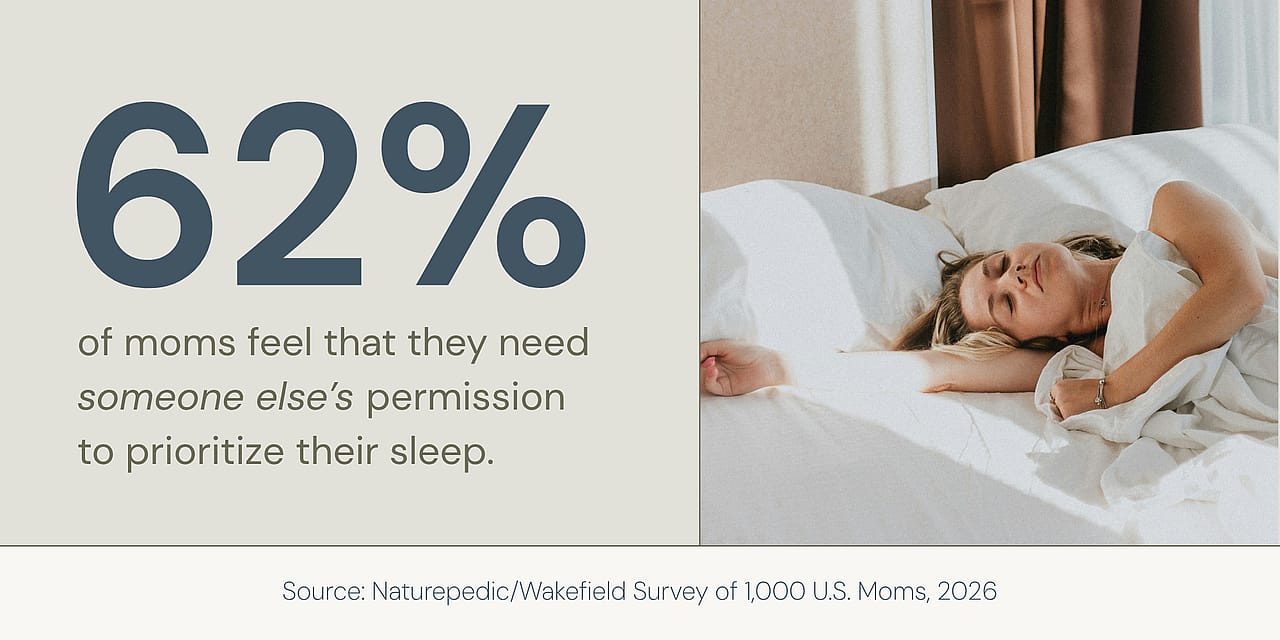
- 62% of moms feel they need someone else's formal permission to prioritize their own sleep without guilt.
- 83% of moms usually wake up feeling like they didn't get a good night's sleep, regardless of how many hours they spent in bed.
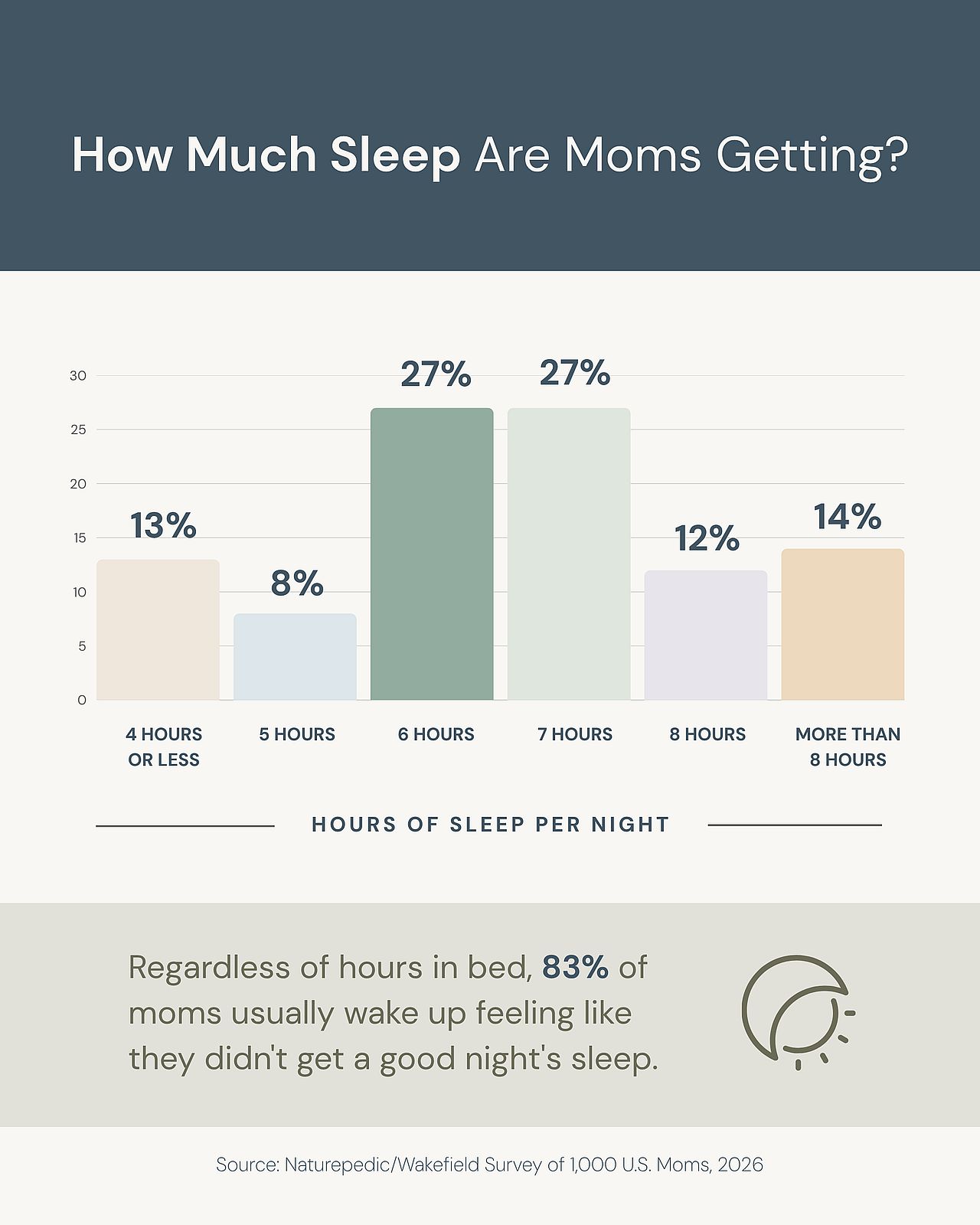
- Moms most commonly get six or seven hours of sleep a night, and 48% of moms get less than seven.
- 90% struggle to quiet a racing mind at bedtime.
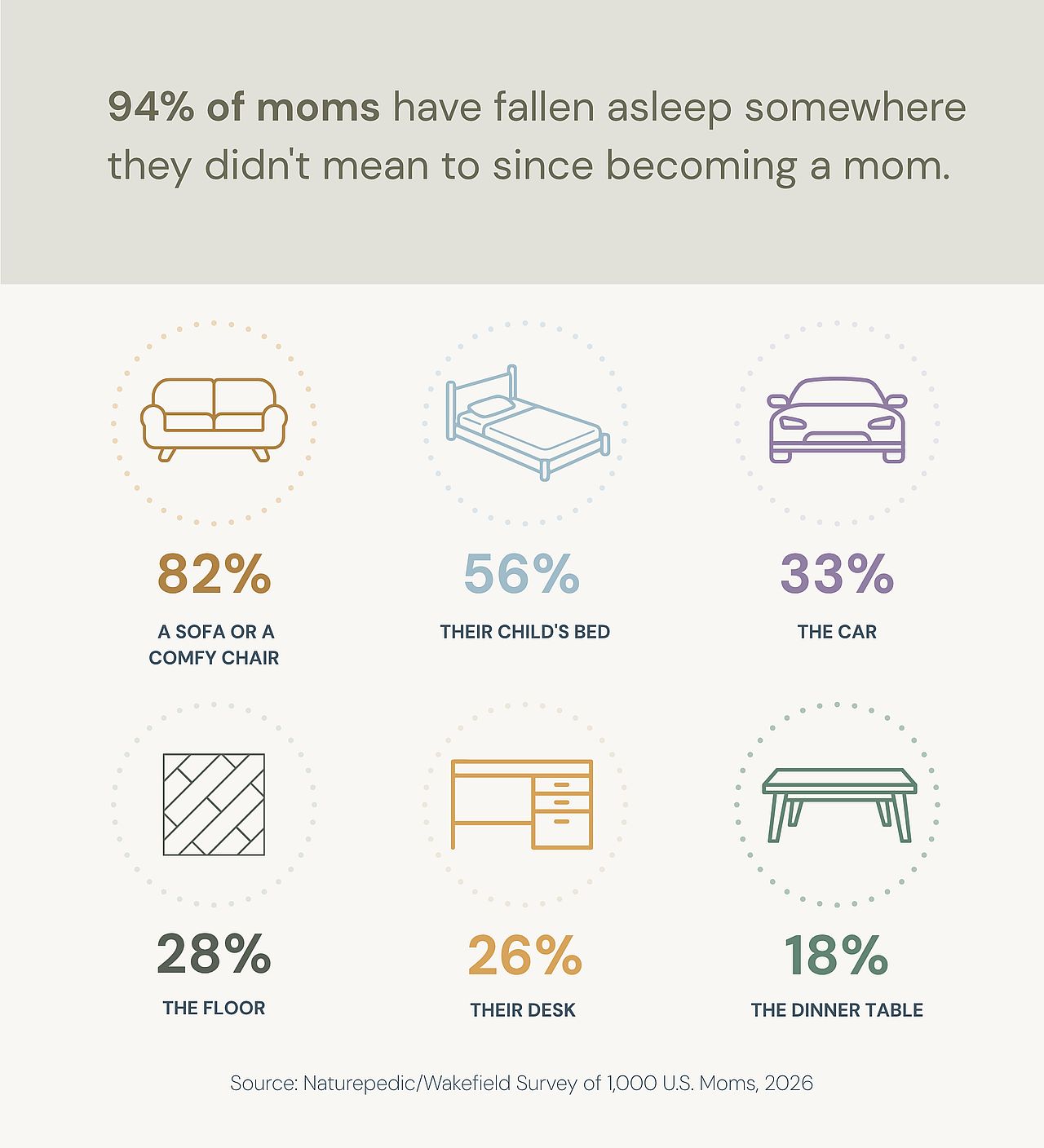
- 94% have fallen asleep somewhere unexpected since becoming a mom.
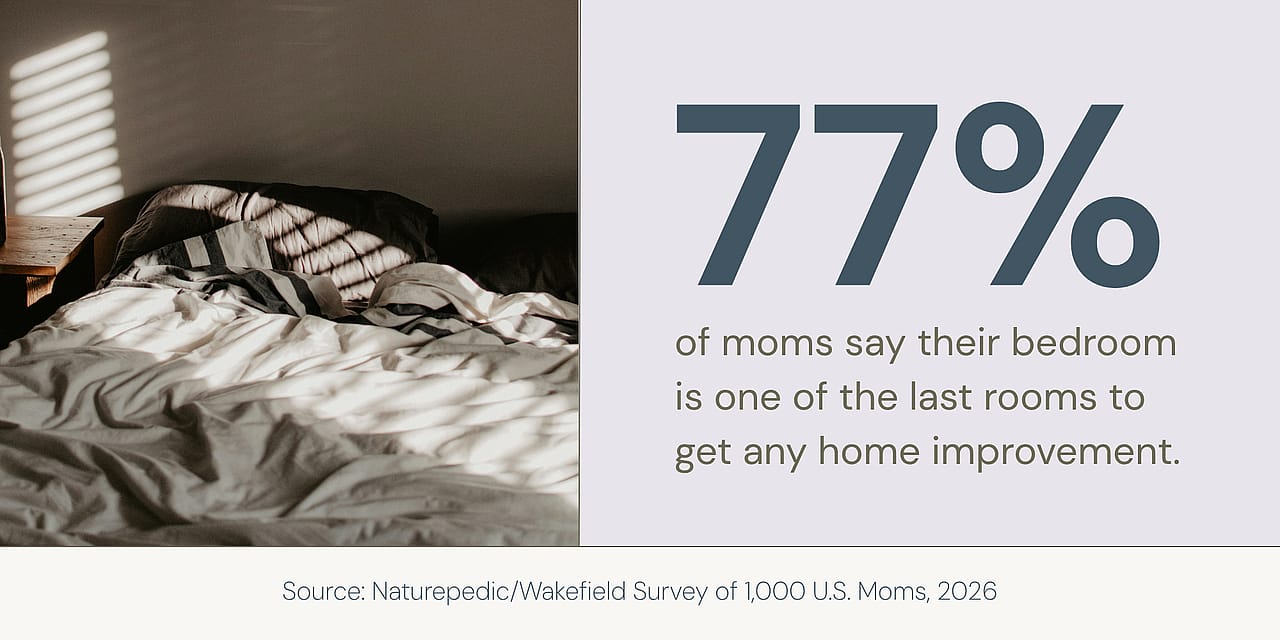
- 77% say their bedroom is one of the last rooms to get home-improvement attention.
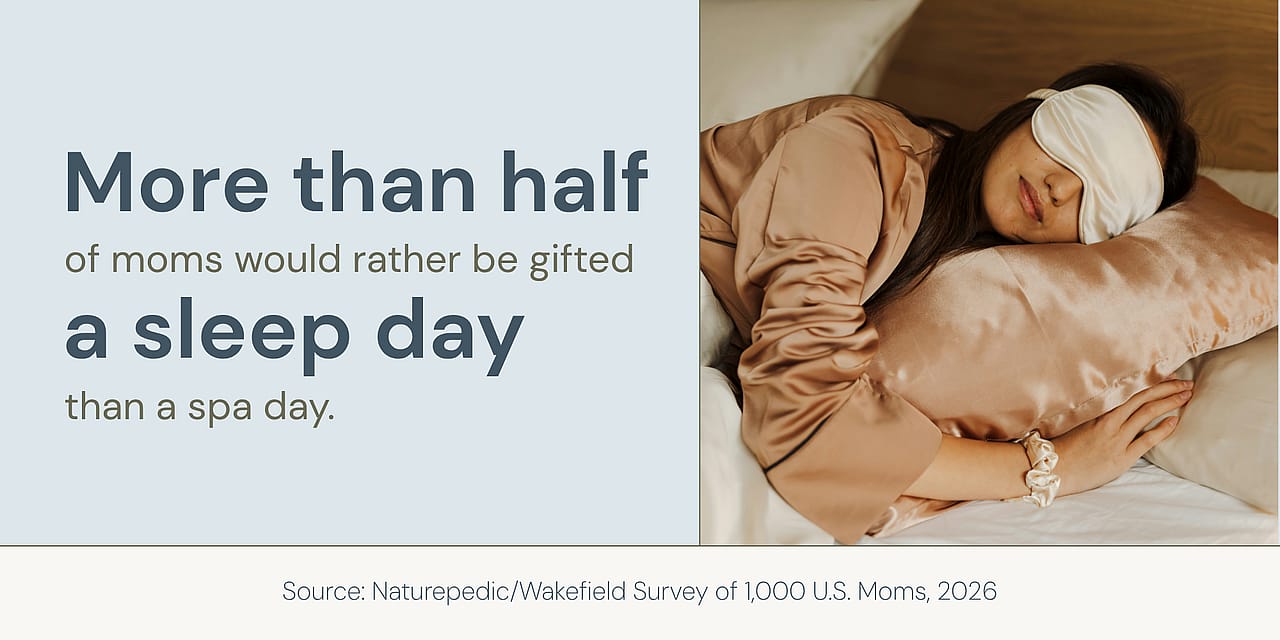
- 55% would rather be given a sleep day than a spa day.
The Permission Gap: Why Rest Feels Like It Needs Approval
Ask a mom if she needs a good night's sleep, and most will say yes without hesitation. Ask her if she could actually take that rest without feeling guilty about it, and the answer gets more complicated.
What's the Sleep Permission Gap?
The sleep permission gap is the space between what moms know they need and deserve — rest — and what they feel entitled to take without guilt or someone else's approval.
The Science of Moral Licensing: Why Doing Good All Day Makes Rest Feel Off-Limits
The permission gap isn't just a mom thing. Moral licensing is a documented pattern in behavioral science, and it may explain why rest can feel like something to be earned rather than simply taken.
Moral licensing is a psychological pattern where people who've already done something good feel licensed to indulge in behavior they'd normally hold back, even when that "indulgence" is something as basic as rest. First defined by Stanford researchers Anna Merritt, Daniel Effron, and Benoît Monin in 2010, the concept explains a pattern that is commonly experienced by moms: After a full day of caregiving, prioritizing your own sleep can feel like it needs to be earned rather than simply taken.
For moms, the mental math of moral licensing generally attaches itself to rest. A day spent managing school drop-off, work, dinner, and bedtime can start to feel like a running ledger, one where sleep only gets "approved" once everything else is checked off. The trouble is, that ledger rarely closes. There's always one more thing that could have been done, which means permission to rest never quite arrives on its own.
Moms Aren't Getting the Sleep They Need — Or Rest They Can Feel
Believing you deserve the same sleep as anyone else is one thing. Actually getting it is another. Here's what the survey data shows about how much moms are sleeping, and how rested they actually feel.
How Much Sleep Are Moms Actually Getting?
Moms ages 25 to 45 most commonly get six or seven hours of sleep a night, at 27% each. Nearly half, 48%, get less than seven hours — falling short of the seven-to-nine-hour range most sleep experts recommend for adults.
Waking Up Tired, No Matter What
Hours in bed aren't telling the whole story. Regardless of how much sleep they log, 83% of moms usually wake up feeling like they didn't get a good night's rest. If that sounds familiar, here's why you might be waking up tired even after a full night in bed.
The Myth of the Supermom Who Needs Less Sleep
There's a persistent idea that moms simply need less sleep than everyone else — but the data doesn't back it up. While 38% of moms believe they're better able to function on less sleep than other people, more than 60% say moms need about the same amount of sleep as any other adult, even if they don't often get it. The gap between that belief and moms' actual sleep habits is a big part of the permission gap story: Most moms already know rest isn't optional. They just don't feel like they can take it.
Maternal Vigilance: Why Moms' Minds Won't Switch Off
A busy mind at bedtime isn't just about a long to-do list. For many moms, there may be something more deeply wired going on — a built-in alertness that doesn't fully power down, even at rest.
What Is Maternal Vigilance?
Maternal vigilance is a heightened state of alertness that allows a mother to detect and respond to her child's needs even while asleep or at rest, driven by adaptations in how the maternal brain processes caregiving cues.
The Science of the Mom Who Can't Fully Rest
Research suggests this isn't just a feeling. A 2023 study in the journal Sleep tracked 232 couples from pregnancy through 12 months postpartum, using actigraphy — wearable sensors that monitor rest and activity — to measure how mothers and fathers actually slept. At every single checkpoint, mothers showed measurably poorer sleep quality than fathers, and roughly 70% of mothers showed at least sub-clinical insomnia, compared with about 50% of fathers.
The effects don't stop at the mothers themselves. A 2022 daily-diary study in the same journal found that night-to-night dips in mothers' sleep quality predicted more strained caregiving feelings toward their infants the very next day. One possible explanation is neurological: A 2016 research review by developmental neuroscientist Pilyoung Kim, published in New Directions for Child and Adolescent Development, points to measurable structural and functional changes in mothers' brains during the postpartum period — changes that heighten their responsiveness to infant cues, like a cry, even during rest.
Takeaway
Research suggests that mothers' brains adapt to stay attuned to a child's needs, even during sleep, which may help explain why so many mothers report feeling like they can never fully switch off.
Does This Explain the Busy-Brain Bedtime Struggle?
It may. In Naturepedic's survey, 90% of moms said they struggle at least sometimes to quiet a "busy," to-do-list-filled mind at bedtime, and nearly two-thirds said this happens often or all the time. It's the question so many exhausted moms ask themselves at midnight: Why can't I relax, even when my body is running on empty?
Maternal vigilance doesn't fully explain a racing mind, but it does suggest that some moms' brains may be wired to stay more alert than they realize, even when their bodies are exhausted.
Who's Hit Hardest? Moms of Young Kids
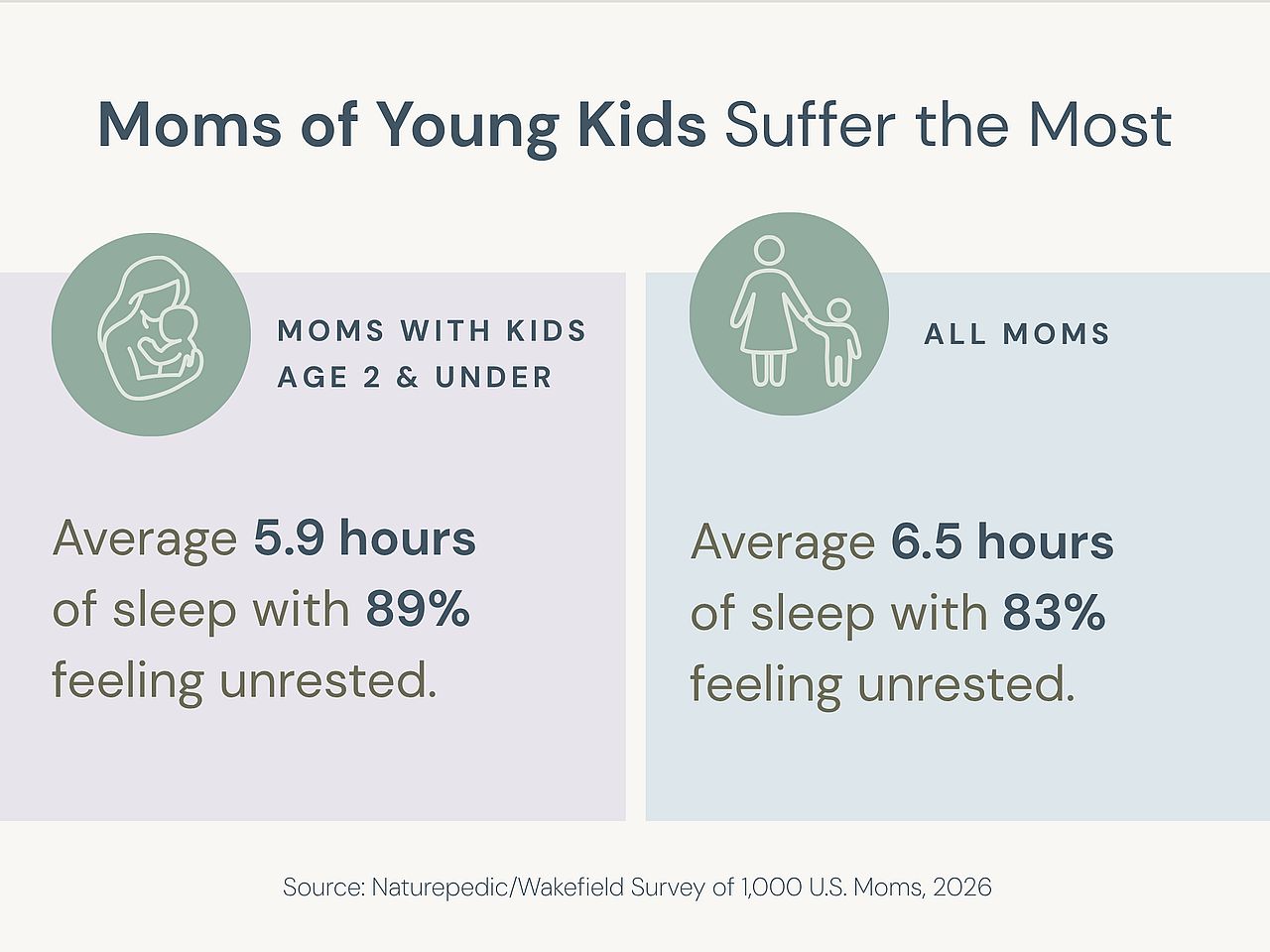
Not every mom experiences the permission gap the same way. Moms with a child aged 2 or younger sleep the least of any group surveyed, averaging 5.9 hours a night compared with 6.5 hours across all moms, and they're the most likely to feel unrested, at 89% versus 83% overall. Notably, a bedtime routine is less likely to be nonnegotiable for this group, at 25% versus 32% overall, even though they may need one the most. Early motherhood, it seems, is often when routine is hardest to hold onto.
The Bed Takeover: Whose Space Is It, Really?
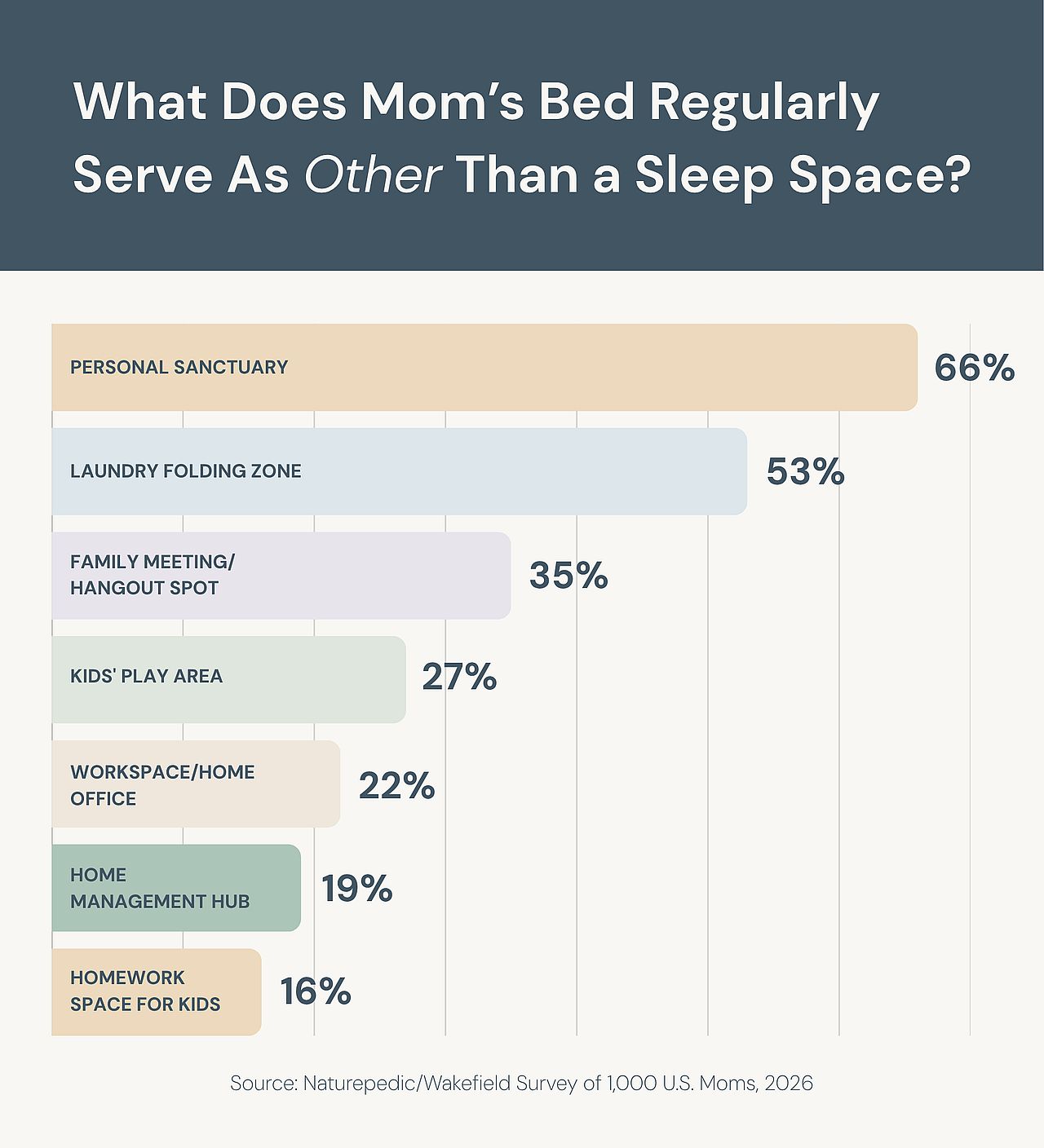
For most moms, the bed isn't just for sleeping. While 66% call it their personal sanctuary, it also regularly serves as a laundry-folding zone (53%), a family meeting or hangout spot (35%), a kids' play area (27%), a workspace (22%), a home-management hub (19%), and even a homework space for the kids (16%).
In Fact, Mom's Whole Room Is an Afterthought
It's not just the bed. For 77% of moms, the bedroom overall is one of the last spaces in the home to get any attention when it comes to updating or improving their space, even as it's asked to do double or triple duty.
Lack of Sleep + Lack of Sleep Space = Chaos
Between disrupted sleep and a bedroom that's rarely just a bedroom, it's perhaps no surprise that 94% of moms have fallen asleep somewhere unexpected since becoming a mother, most often the sofa or a comfy chair (82%) or their child's bed (56%), though plenty have nodded off on the floor (28%), at their desk (26%), or even at the dinner table (18%). It sounds almost comical, but it's a symptom of a serious, chronic sleep deficit.
Who Gets Blamed for Lost Sleep?
Half of moms (50%) say that their kids are most likely to keep them from a good night's sleep. But moms aren't quick to let anyone else off the hook, either — 32% blame themselves due to mom guilt, well ahead of partners (11%) or pets (6%). That self-blame isn't distributed evenly: Moms who are not married or in a relationship blame themselves at more than double the rate of married moms (56% versus 27%).
What Would Actually Help?
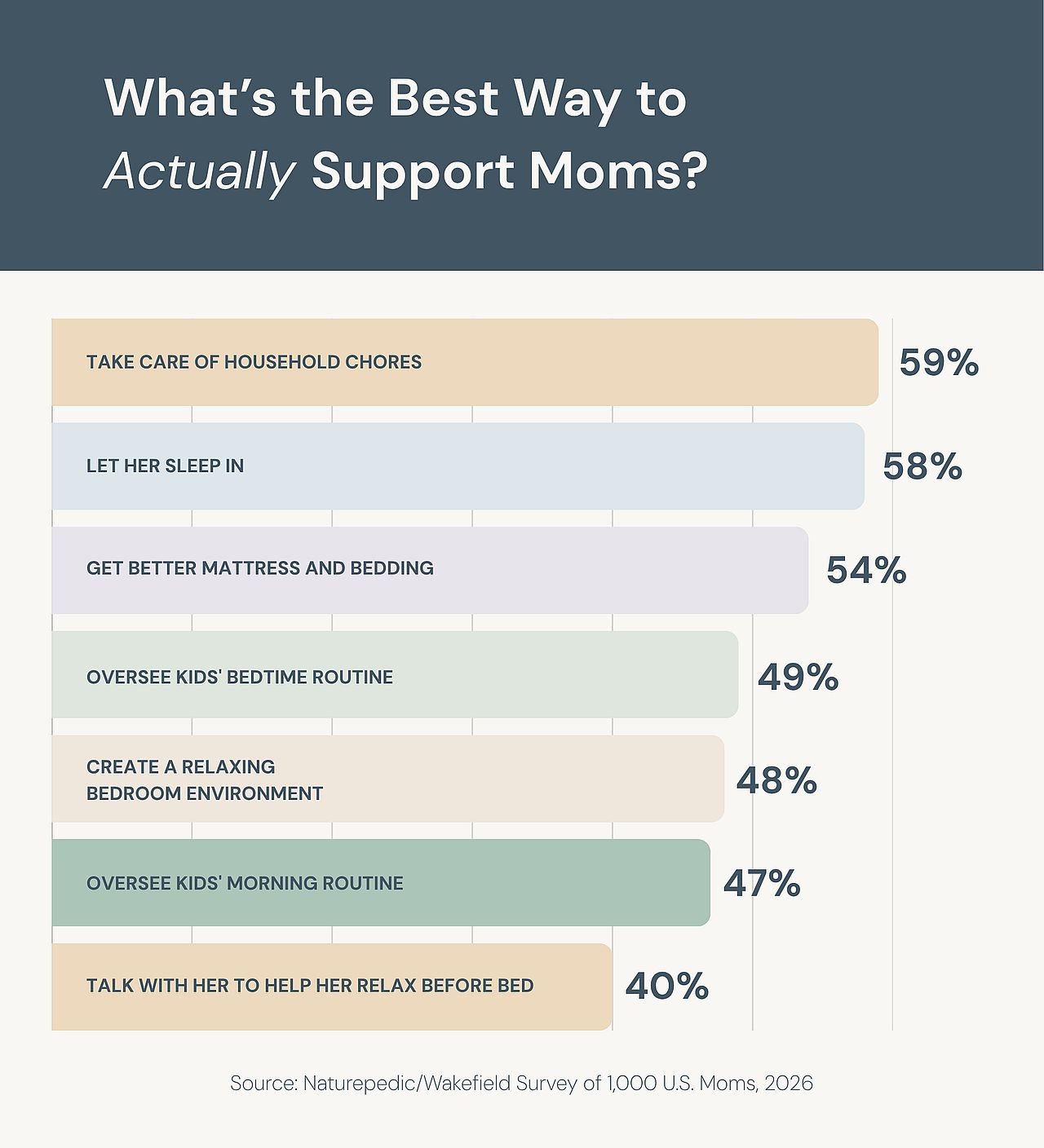
When asked what would genuinely help them sleep better, moms didn't ask for more emotional support — they asked for fewer things to manage. Taking over household chores (59%) and simply letting them sleep in (58%) topped the list, followed closely by a more comfortable mattress and bedding (54%), overseeing the kids' bedtime routine (49%), creating a relaxing bedroom environment (48%), and overseeing the kids' morning routine (47%). Talking with them to help them relax before bed ranked last, at 40%. And when it comes to how moms would want to be treated, more than half (55%) would rather be given a sleep day than a spa day this year.
Giving Yourself (and Other Moms) Permission to Rest
If there's one thing the data makes clear, it's that mothers experiencing mom burnout don't need to be told rest matters — they already know. What's missing is permission. And permission, unlike a mattress or a sleep-in morning, isn't something anyone else can give you. It has to start with treating rest as something you've already earned, not something you have to justify.
A few places to start:
- Give yourself the same sleep standard you'd want for any other person you love.
- Let go of the idea that rest has to be "earned" through a productive day.
- Ask for practical help first. Moms overwhelmingly say it's chores and sleep-in mornings that move the needle, not more conversation about how tired they are.
- Build a bedroom that actually functions as a bedroom, even if it's a small, deliberate corner of one.
None of this fixes the mental load of motherhood overnight. But permission doesn't have to arrive as a grand gesture — it can start with one full night, one honest conversation with a partner, or one bedroom that finally gets its due.
Survey Methodology
This survey was conducted by Wakefield Research among 1,000 nationally representative U.S. moms, ages 25 to 45, defined as those with children under age 18 in the home, between April 21 and April 29, 2026, using an email invitation and an online survey. The data has been weighted. Results of any sample are subject to sampling variation; for this study, the margin of error is plus or minus 3.1 percentage points at the 95% confidence level.
This story was produced by Naturepedic and reviewed and distributed by Stacker.

